Velvetleaf
Abutilon theophrasti
A tall summer-annual broadleaf of disturbed ground and turf margins with large, soft, heart-shaped leaves.
Identification
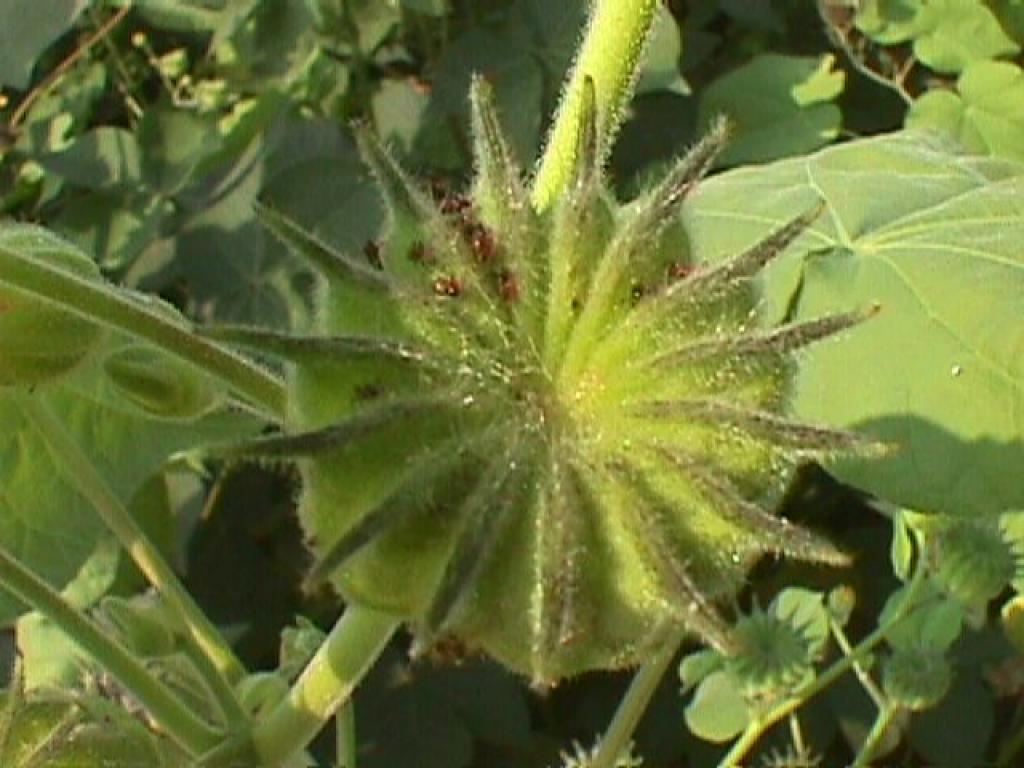
Velvetleaf is an erect summer annual reaching several feet, with large (up to hand-sized) heart-shaped leaves that are soft and velvety-hairy on both surfaces and give off a distinctive odor when crushed. Small yellow-orange five-petaled flowers arise in the leaf axils and mature into a distinctive cup-shaped ring of seed pods that turns black at maturity. Its size, velvety heart-shaped leaves, and ringed seed capsule are diagnostic.
Symptoms & Damage
Coarse, tall broadleaf plants with large velvety leaves disrupt turf uniformity along edges and in thin or unmowed areas, shading and crowding desirable grass and reseeding the site.
Biology
A summer annual reproducing solely by seed; a single plant produces thousands of long-lived seeds that persist in the soil seed bank for many years. Seedlings emerge from late spring through summer as soils warm and grow rapidly.
Occurrence & Spread
Chiefly a weed of cultivated fields, gardens, roughs, and disturbed edges rather than closely mowed turf; it establishes where the canopy is open or soil has been disturbed. Persistent seed banks make it a recurring problem in newly seeded or renovated areas.
Favorable Conditions
Warm soils, disturbed or open ground, thin turf.
Cultural Management
Maintain a dense, competitive stand through proper mowing, fertility, and irrigation so seedlings are shaded out. Velvetleaf does not tolerate regular close mowing, so routine mowing eliminates it from maintained turf; the main concern is unmowed roughs, beds, and margins where hand-pulling or spot treatment of young plants before they set seed prevents seed-bank buildup.
Further Reading
University extension resources — open in a new tab.
Related Reports
No published reports yet for this pest.
Reports will appear here as they are peer-reviewed and published.