Bitterweed (sneezeweed)
Helenium amarum
A summer-annual composite with fine, thread-like leaves and yellow flowers that taints milk and is bitter to livestock.
Identification
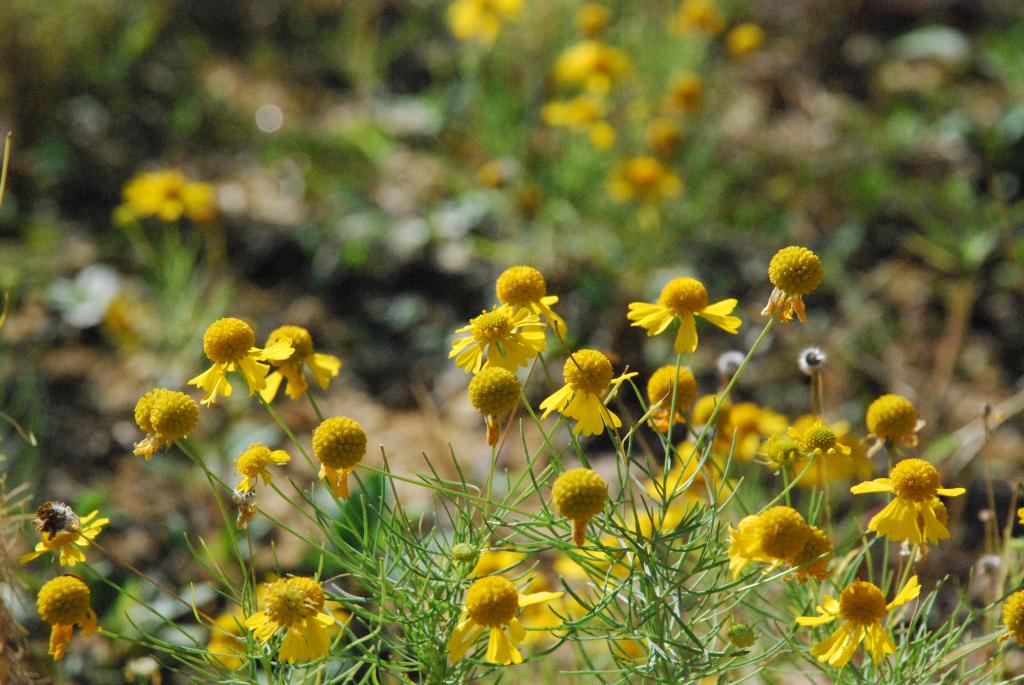
A bushy, erect summer annual with numerous fine, thread-like (almost pine-needle) alternate leaves and many small yellow daisy-like flower heads with drooping, wedge-shaped, three-lobed yellow ray petals and a rounded yellow center. The plant has a bitter taste and, when eaten by dairy cows, imparts a bitter off-flavor to milk. Its fine foliage and yellow flowers on a bushy plant are diagnostic.
Symptoms & Damage
Bushy, fine-leaved, yellow-flowered composites appear in thin, sandy warm-season turf and pastures, reseeding and tainting milk if grazed.
Biology
A seed-reproducing summer annual that emerges in warm soils, flowers through summer and fall, and reseeds; builds up on overgrazed and thin sites.
Occurrence & Spread
A weed of overgrazed pastures, sandy disturbed soils, roadsides, and thin warm-season turf in the southern US; favored by low fertility, overgrazing, and open ground.
Favorable Conditions
Sandy, low-fertility, overgrazed, open sites.
Cultural Management
Maintain competitive turf and appropriate fertility; mow to prevent flowering and seed set. On pastures and margins, improve stand vigor and remove plants before seed set. Where dairy livestock graze, prioritize removal to protect milk quality.
Further Reading
University extension resources — open in a new tab.
Related Reports
No published reports yet for this pest.
Reports will appear here as they are peer-reviewed and published.