
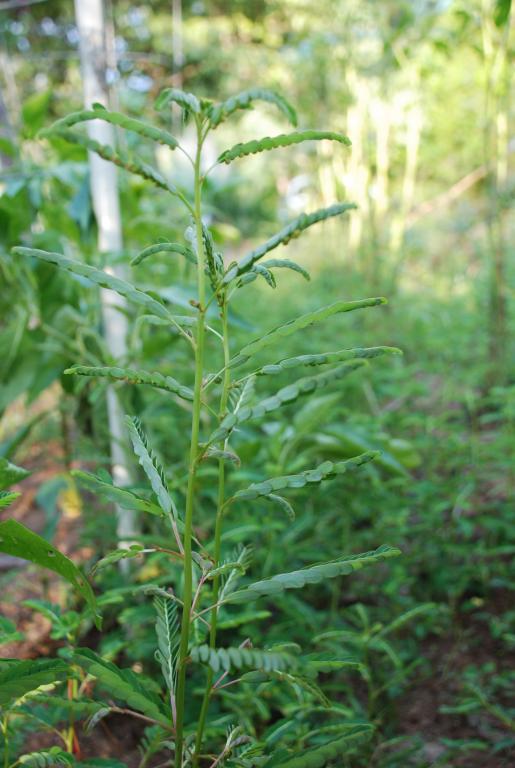
Chamberbitter (gripeweed)
Phyllanthus urinaria
A fast-cycling summer-annual with fern-like leaf arrangement and tiny warty fruits lined beneath the branchlets.
Identification
An erect, branching summer annual whose small oblong leaves are arranged in two neat rows along slender branchlets, giving a fern- or mimosa-like (but non-compound) appearance. Tiny greenish flowers and, diagnostically, minute warty round fruits are borne on the undersides of the branchlets in a row. The two-ranked leaves with small warty fruits lined beneath are unmistakable.
Symptoms & Damage
Erect, fern-like plants with tiny warty fruits lined under the branchlets rapidly colonize warm-season turf and beds, reseeding within weeks.
Biology
A prolific, fast-cycling seed-reproducing summer annual that can flower and set seed within weeks of emergence and produce multiple generations per season, building a heavy seed bank; seeds are explosively and easily dispersed.
Occurrence & Spread
An increasingly troublesome weed of warm-season turf, landscape beds, nurseries, and container stock in the southern US; favored by heat, moisture, and open or thin turf, and notorious for rapid reinfestation.
Favorable Conditions
Hot, moist, open or thin warm-season turf and beds.
Cultural Management
Maintain a dense, vigorous stand and reseed thin areas to deny it open ground; because it reseeds so fast, remove or treat plants before the tiny fruits mature. Mulch beds and hand-pull young plants promptly; sanitation in nursery stock limits spread.
Further Reading
University extension resources — open in a new tab.
Related Reports
No published reports yet for this pest.
Reports will appear here as they are peer-reviewed and published.