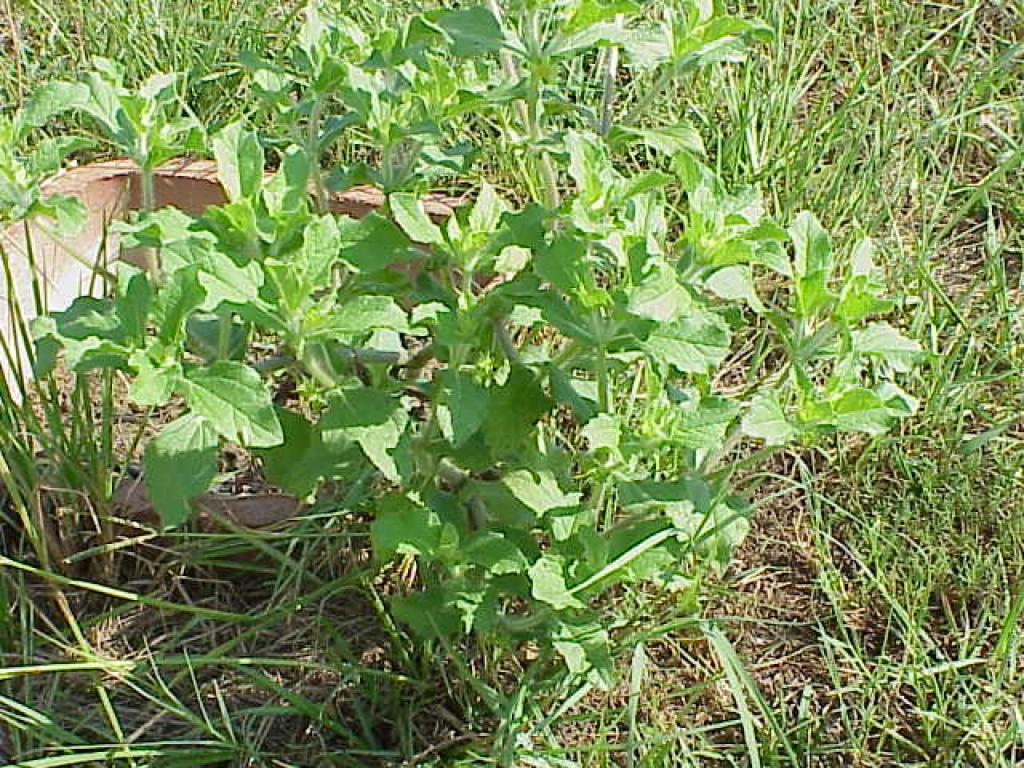
Bristly starbur
Acanthospermum hispidum
A coarse summer-annual broadleaf producing hard, spiny burs that cling to skin, clothing, and equipment.
Identification
A stiff, much-branched summer annual with opposite, hairy, wedge-shaped leaves and small yellow flowers. Its most diagnostic feature is the fruit: flattened, hard burs armed with hooked spines that readily attach to clothing, fur, and mowing equipment, aiding dispersal.
Symptoms & Damage
Coarse, spiny-fruited plants in thin, sandy turf produce burs that injure and cling to people, animals, and equipment, and reseed the area.
Biology
A seed-reproducing summer annual; the spiny burs each contain seed and are spread by animals, people, and equipment, establishing new infestations along traffic paths.
Occurrence & Spread
Common in the southern US on sandy, disturbed soils, roadsides, pastures, and thin turf; favored by heat, drought, and low fertility where the desirable stand is weak.
Favorable Conditions
Hot, dry, sandy, low-fertility, disturbed sites.
Cultural Management
Maintain turf density and vigor to exclude seedlings; mow regularly to prevent bur formation. Because burs spread on equipment, clean mowers moving between infested and clean areas, and remove isolated plants by hand (wearing gloves) before burs harden.
Further Reading
University extension resources — open in a new tab.
Related Reports
No published reports yet for this pest.
Reports will appear here as they are peer-reviewed and published.