
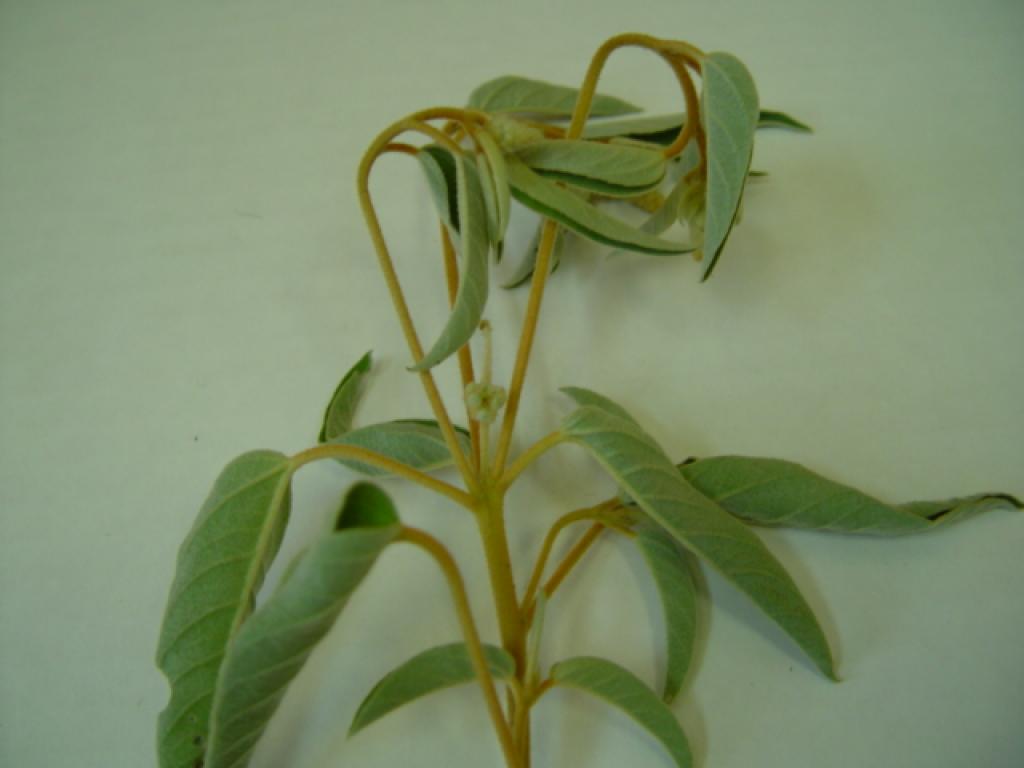
Hogwort (woolly croton)
Croton capitatus
A densely woolly, grayish summer-annual broadleaf of dry, sandy, disturbed sites.
Identification
An erect, branching summer annual covered in dense, star-shaped (stellate) hairs that give the whole plant a woolly, grayish or silvery appearance. Leaves are alternate, oblong, and soft-hairy; flowers are small and clustered at the branch tips. The overall woolly gray look is diagnostic.
Symptoms & Damage
Woolly, gray-green broadleaf plants appear in dry, sandy roughs and thin turf, competing on poor sites and reseeding.
Biology
A seed-reproducing summer annual of dry sites; emerges as soils warm and reseeds, with seeds persisting in sandy soils.
Occurrence & Spread
Common on dry, sandy, overgrazed, or disturbed soils, pastures, roadsides, and roughs in the central and southern US; favored by heat, drought, and low competition.
Favorable Conditions
Dry, sandy, low-competition, disturbed ground.
Cultural Management
Maintain a competitive stand and mow regularly to exclude it. On dry roughs and margins, remove young plants before seed set; improving fertility and turf density reduces establishment.
Further Reading
University extension resources — open in a new tab.
Related Reports
No published reports yet for this pest.
Reports will appear here as they are peer-reviewed and published.