
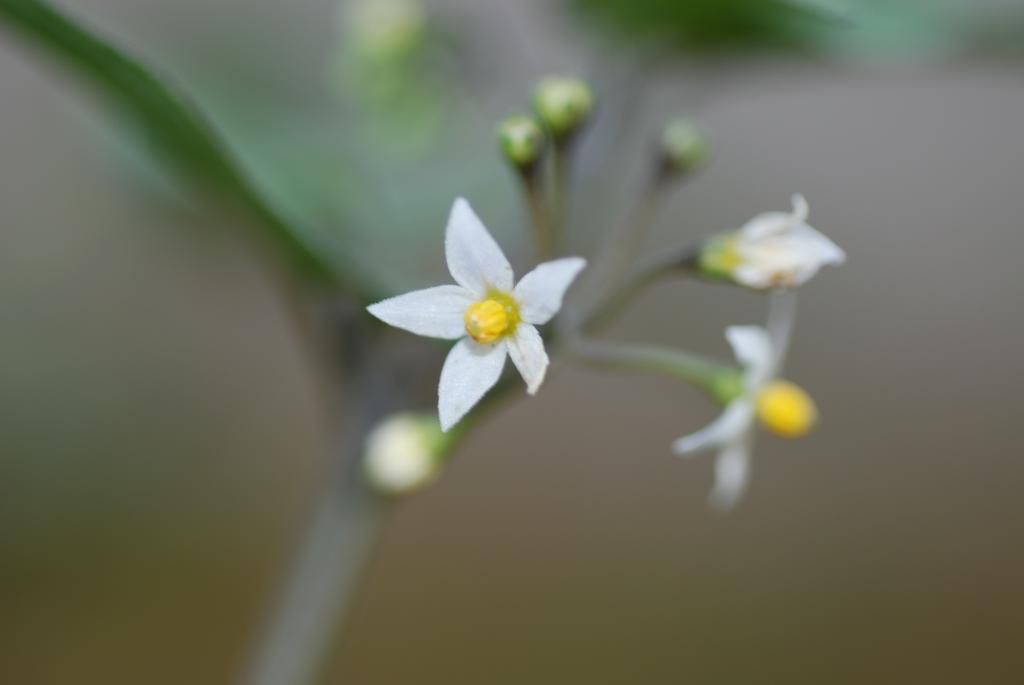
Eastern black nightshade
Solanum ptychanthum
A summer-annual nightshade with small white star flowers and clusters of shiny black berries; toxic when green.
Identification
An erect, branching summer-annual nightshade with alternate, ovate, wavy-margined to slightly toothed leaves, small white star-shaped flowers with yellow anthers in small drooping clusters, and small round berries that ripen from green to shiny black. It lacks spines (unlike horsenettle). The small white star flowers and clusters of black berries are diagnostic; green berries and foliage contain toxic alkaloids.
Symptoms & Damage
Branching nightshade with white star flowers and black berry clusters appears in thin turf, beds, and disturbed ground, reseeding; green fruit toxic.
Biology
A seed-reproducing summer annual germinating in warm soils and reseeding via the berries (spread by birds); builds a persistent seed bank.
Occurrence & Spread
A weed of gardens, fields, nurseries, disturbed ground, and thin turf across the US; favored by fertile, moist, disturbed soils and open canopies.
Favorable Conditions
Fertile, moist, disturbed soils.
Cultural Management
Maintain dense turf and mow regularly to exclude it; cultivate or hand-pull young plants in beds and margins before berries form. Mulch beds to suppress germination.
Further Reading
University extension resources — open in a new tab.
Related Reports
No published reports yet for this pest.
Reports will appear here as they are peer-reviewed and published.