
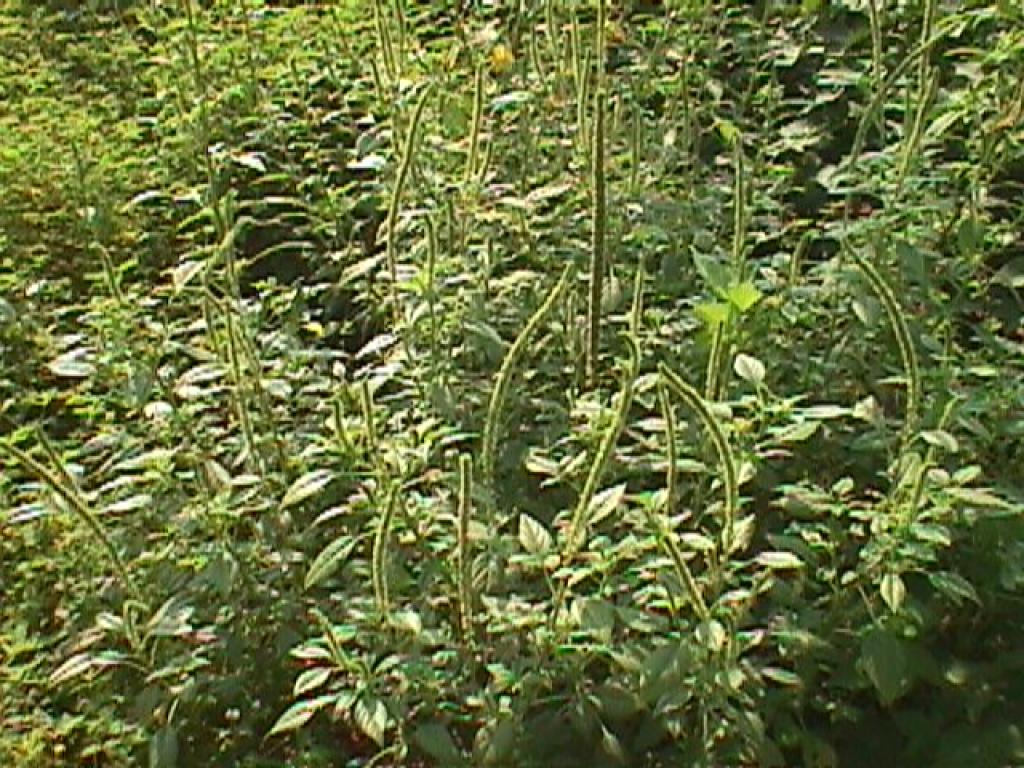
Palmer amaranth
Amaranthus palmeri
An extremely aggressive, fast-growing pigweed notorious for herbicide resistance and prolific seed production.
Identification
A vigorous, erect summer annual that can grow very tall and fast, with alternate diamond-shaped leaves on long petioles (often longer than the leaf blade) and hairless stems. Plants are separately male and female; female plants bear long, slender, very bristly terminal flower spikes that are sharp to the touch. A whitish V-shaped watermark sometimes appears on leaves.
Symptoms & Damage
Fast-growing, tall erect broadleaf plants with long bristly seed spikes rapidly dominate thin turf, beds, and disturbed ground, reseeding prolifically.
Biology
A dioecious summer annual reproducing by seed, with exceptional growth rate and seed output (a large female can produce hundreds of thousands to over a million seeds). Extended emergence and cross-pollination spread herbicide-resistance traits rapidly.
Occurrence & Spread
Primarily an agronomic super-weed, but it invades disturbed sites, nurseries, roughs, and thin or renovated turf; favored by heat, high fertility, and open ground. Widespread glyphosate and ALS-inhibitor resistance make it a management concern anywhere it establishes.
Favorable Conditions
Hot weather, high fertility, open disturbed ground.
Cultural Management
Prevent establishment with a dense, quickly closing turf canopy and prompt reseeding of thin areas; regular mowing removes it from maintained turf. Remove escapes by hand before seed set — a single female setting seed can seed an area for years — and clean equipment to avoid moving seed.
Further Reading
University extension resources — open in a new tab.
Related Reports
No published reports yet for this pest.
Reports will appear here as they are peer-reviewed and published.