Pine barren flatsedge
Cyperus retrorsus
A perennial flatsedge of sandy southern sites with cylindrical, bristly seedhead clusters.
Identification
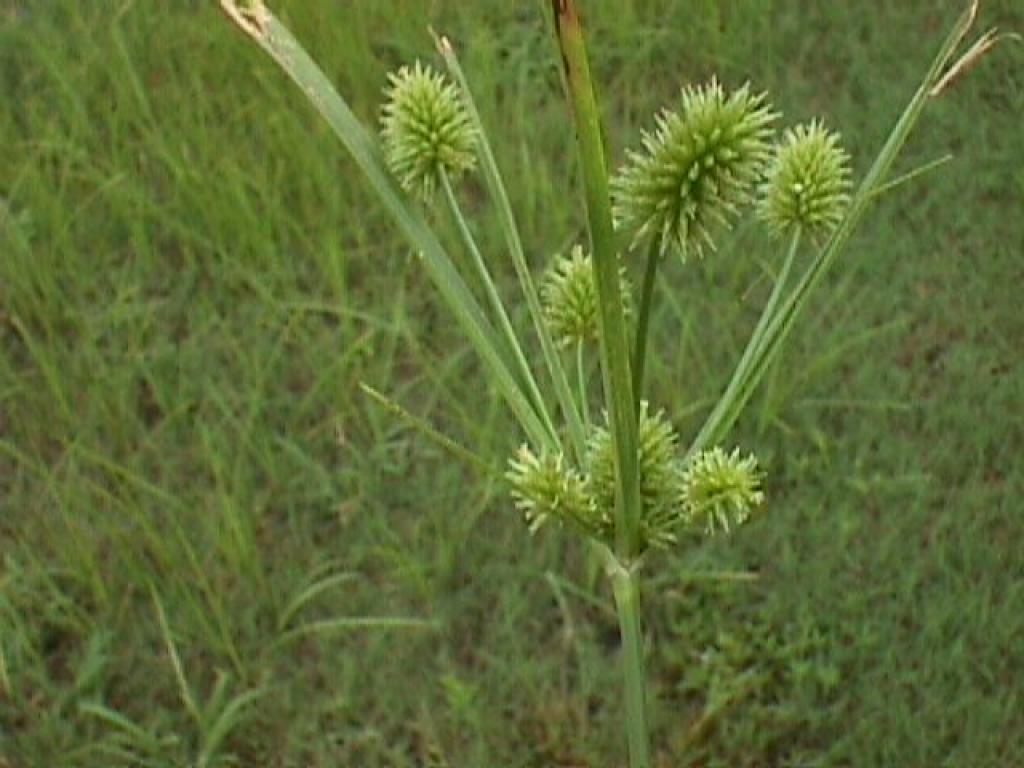
A perennial sedge with a triangular stem and cylindrical to oblong, densely packed clusters of tiny spreading spikelets that give the seedhead a bristly, bottlebrush-like appearance, subtended by several leaf-like bracts. Its cylindrical bristly clusters distinguish it from globe and annual sedges.
Symptoms & Damage
Bristly, cylindrical-headed sedge clumps appear in sandy, thin warm-season turf and margins.
Biology
A perennial reproducing by seed and basal growth; adapted to sandy soils and persistent once established.
Occurrence & Spread
Common on sandy soils, pine barrens, roadsides, and thin warm-season turf in the southeastern US; favored by sandy, open, droughty sites.
Favorable Conditions
Sandy, droughty, open sites.
Cultural Management
Build turf density on sandy sites through appropriate fertility and irrigation to reduce establishment; mow to limit seedheads. Spot-treat established clumps as needed.
Further Reading
University extension resources — open in a new tab.
Related Reports
No published reports yet for this pest.
Reports will appear here as they are peer-reviewed and published.