
Turfgrass Weed Library
Reference profiles for grassy weeds, broadleaf weeds, and sedges — identification, biology, and cultural management.
Reference only. Always consult current product labels before making herbicide applications. Contact your state extension service or a licensed applicator for site-specific guidance.
67 weeds
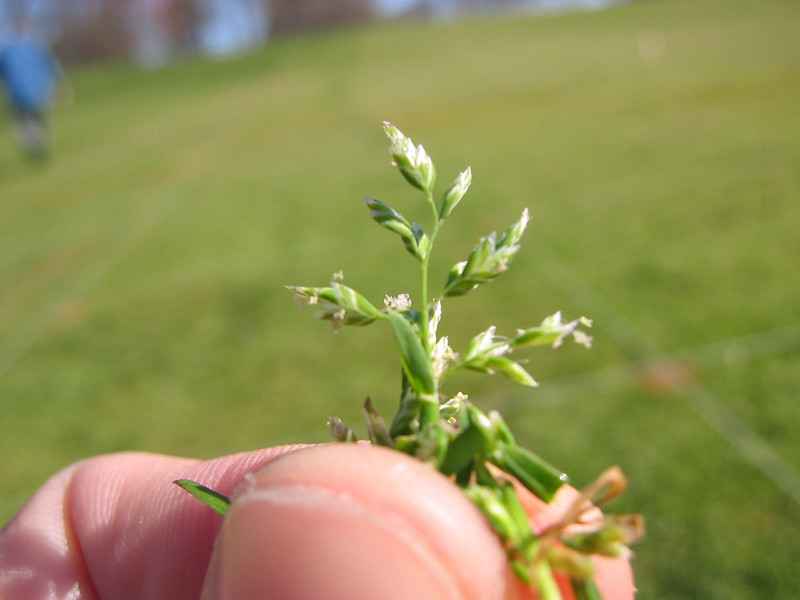
Annual bluegrass (Poa annua)
Poa annua
A highly adaptable weed (and sometimes managed turf) that produces prolific seedheads and struggles under stress.
Bahiagrass
Paspalum notatum
A coarse warm-season perennial grass with a distinctive Y-shaped seed head that forms unsightly clumps in lawns and roughs.
Barnyardgrass
Echinochloa crus-galli
A coarse summer-annual grass of thin, wet, or newly seeded turf, growing in spreading clumps with reddish stem bases.
Bermudagrass (as a weed)
Cynodon dactylon
Desirable as turf in the south but an aggressive invader of cool-season lawns via stolons and rhizomes.
Black medic
Medicago lupulina
A low-growing clover-like legume with trifoliate leaves and small yellow flower clusters; indicates low nitrogen.

Broadleaf plantain
Plantago major
A broadleaf perennial forming rosettes of broad, ribbed leaves with rat-tail seed spikes.
Buckhorn plantain
Plantago lanceolata
A perennial plantain with narrow lance-shaped leaves and cone-like seed heads on long stalks.
Bull thistle
Cirsium vulgare
A biennial thistle forming a large spiny rosette the first year and a tall spiny flower stalk the second.
Canada thistle
Cirsium arvense
A creeping perennial thistle that spreads aggressively by deep roots, forming spiny patches.
Carpetweed
Mollugo verticillata
A fast-growing summer annual that forms flat, circular mats with whorled leaves in thin turf and new seedings.
Catsear (false dandelion)
Hypochaeris radicata
A dandelion look-alike perennial with hairy basal leaves and branched, wiry flower stalks bearing several yellow flowers.
Chicory
Cichorium intybus
A taprooted perennial with dandelion-like basal leaves and sky-blue flowers on tough, wiry stems.
Common chickweed
Stellaria media
A low-growing winter annual forming dense mats with small white star-shaped flowers.
Common lespedeza
Kummerowia striata (syn. Lespedeza striata)
A wiry, mat-forming summer-annual legume that invades thin, dry, low-fertility turf and tolerates close mowing.
Common mallow
Malva neglecta
A taprooted weed with round, scalloped, geranium-like leaves on long petioles and small whitish-pink flowers.
Common purslane
Portulaca oleracea
A succulent, mat-forming summer annual of thin turf and new seedings that thrives in heat and re-roots from broken stems.
Common yarrow
Achillea millefolium
A rhizomatous perennial with soft, fern-like finely divided leaves and flat-topped white flower clusters; tolerates close mowing.
Corn speedwell
Veronica arvensis
A small upright winter-annual speedwell with hairy leaves and tiny blue flowers, common in thin spring turf.

Crabgrass
Digitaria spp.
A summer annual grassy weed that germinates as soils warm and outcompetes thin turf.
Creeping speedwell
Veronica filiformis
A creeping perennial speedwell forming mats with tiny kidney-shaped leaves and blue flowers.
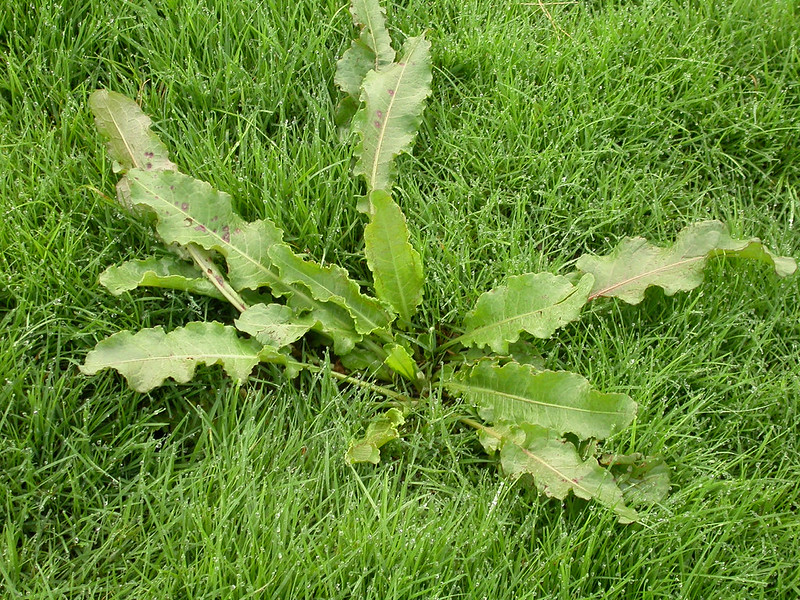
Curly dock
Rumex crispus
A taprooted perennial with large wavy-margined leaves and reddish, rust-colored seed stalks.
Dallisgrass
Paspalum dilatatum
A coarse perennial bunchgrass forming expanding clumps with distinctive seed heads, hard to control.
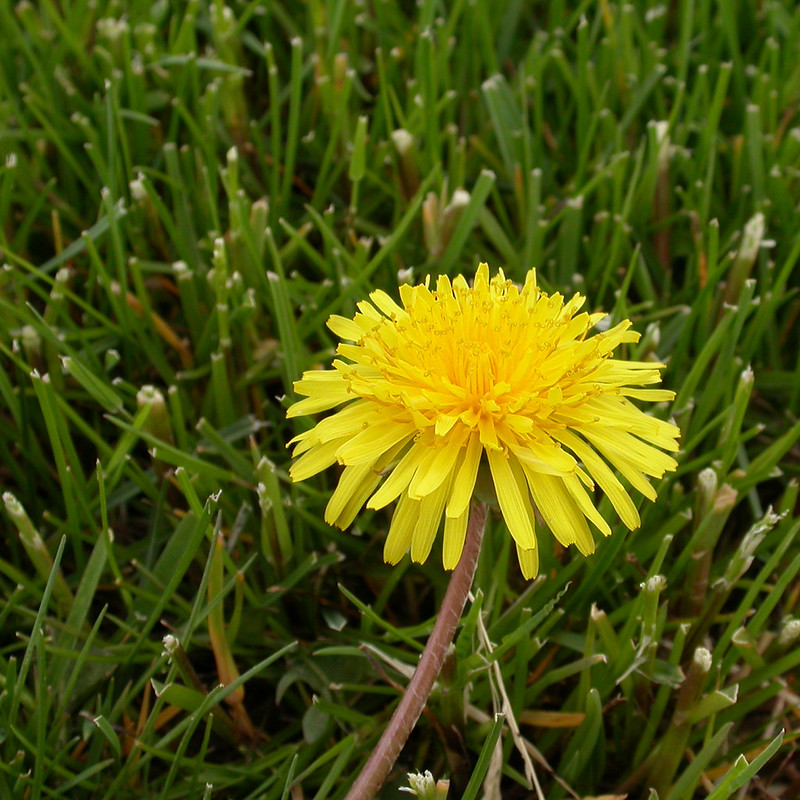
Dandelion
Taraxacum officinale
A perennial broadleaf with a deep taproot and bright yellow flowers turning to puffball seedheads.
Dollarweed (pennywort)
Hydrocotyle spp.
A wet-soil indicator weed with round, shiny, silver-dollar leaves that spreads by rhizomes, tubers, and seed in overwatered turf.
Doveweed
Murdannia nudiflora
A late-emerging summer annual in the dayflower family that mimics St. Augustine and centipede foliage and spreads by stolons, often unnoticed until it displaces turf.
Fall panicum
Panicum dichotomiflorum
A coarse summer-annual grass that germinates later than crabgrass and forms knee-high clumps in thin turf.
Field sandbur (sandspur)
Cenchrus spp.
A summer-annual grass of sandy, droughty sites that produces sharp, spiny burs which injure people and pets.
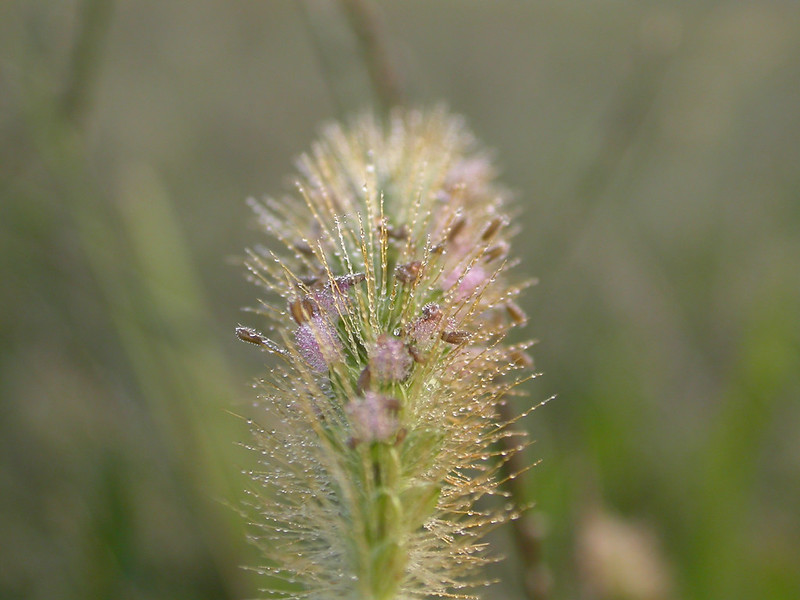
Giant foxtail
Setaria faberi
The largest foxtail, a summer annual with a long, bristly, nodding seedhead and hairy upper leaf surfaces.
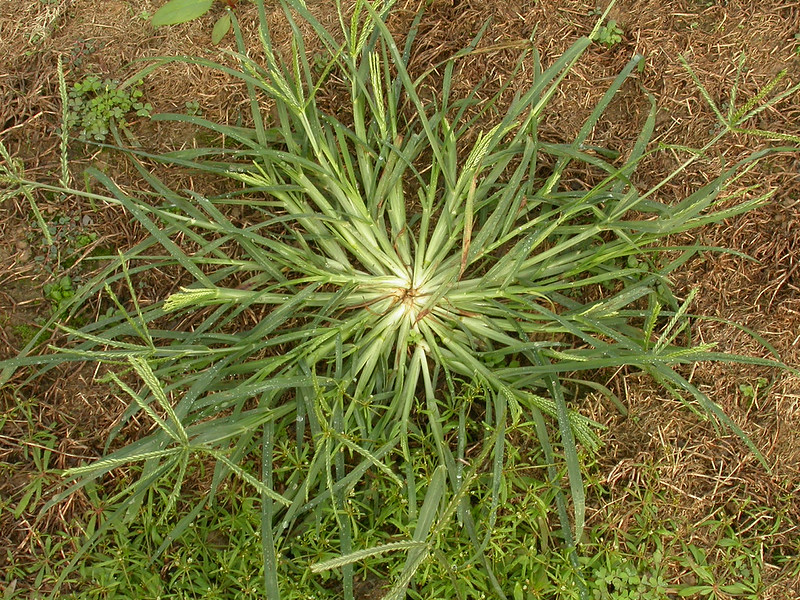
Goosegrass
Eleusine indica
A tough summer annual of compacted, wet areas, germinating later than crabgrass.
Green foxtail
Setaria viridis
A summer-annual foxtail with a slender green bristly seedhead and smooth, hairless leaf blades.
Green kyllinga
Kyllinga spp.
A low-growing perennial sedge resembling fine turf, forming dense mats in wet areas.
Ground ivy (creeping Charlie)
Glechoma hederacea
A creeping mint-family weed with scalloped leaves and square stems that forms dense mats in shade.
Heal-all (selfheal)
Prunella vulgaris
A low, mat-forming perennial in the mint family that tolerates close mowing and flowers with squat purple spikes in thin, moist turf.
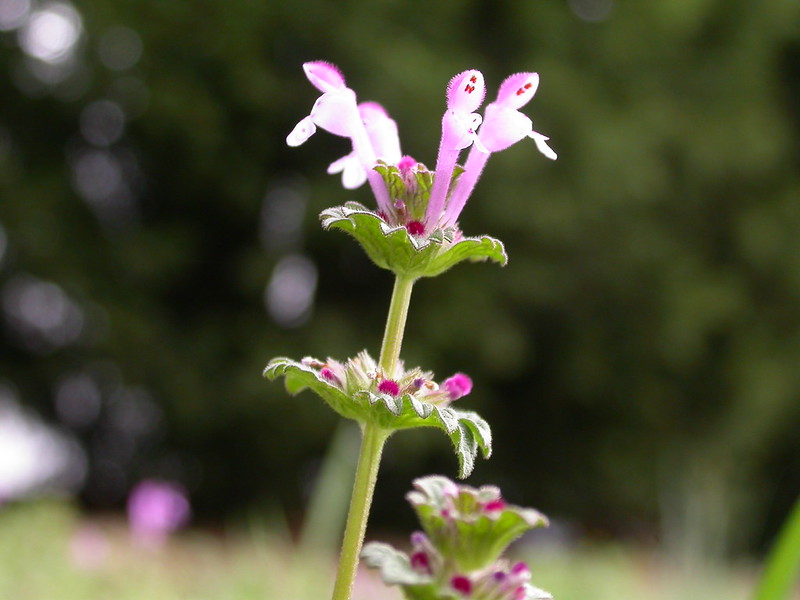
Henbit
Lamium amplexicaule
A winter annual mint with square stems and clasping scalloped leaves topped by purple flowers.
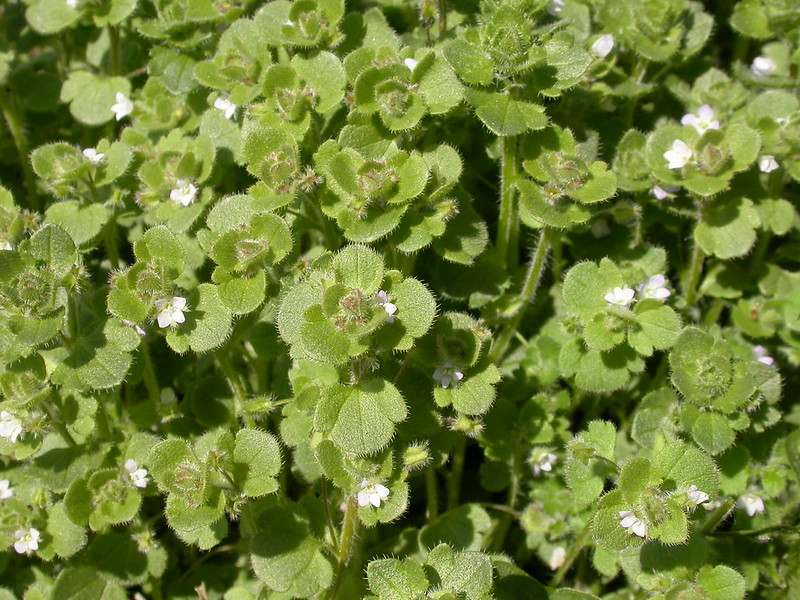
Ivyleaf speedwell
Veronica hederifolia
A winter-annual speedwell with ivy-like lobed leaves and small pale blue flowers.
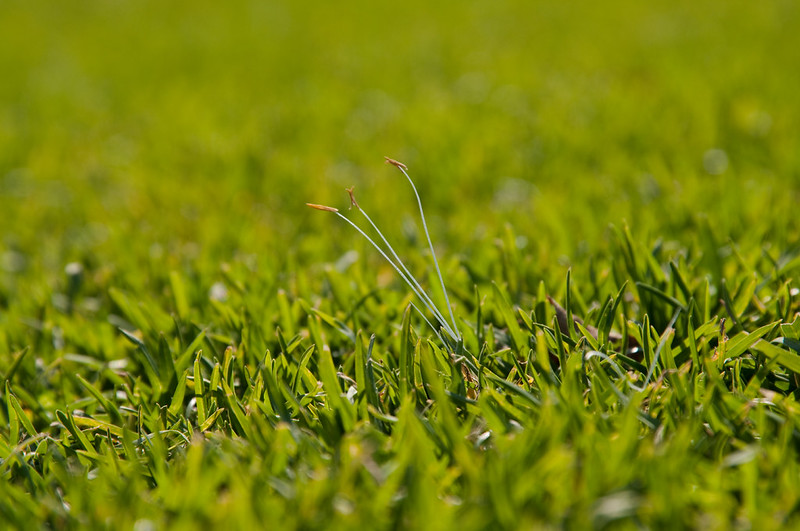
Kikuyugrass
Pennisetum clandestinum
An aggressive warm-season grass that invades cool-season turf, forming dense, rough, weedy patches.
Lawn burweed (spurweed)
Soliva sessilis
A low winter annual that stays inconspicuous through winter, then forms sharp spine-tipped burs in spring that injure bare feet.
Mock strawberry
Potentilla indica (syn. Duchesnea indica)
A low, strawberry-like perennial that creeps by runners through shaded, moist turf, with yellow flowers and bland red fruit held above the leaves.
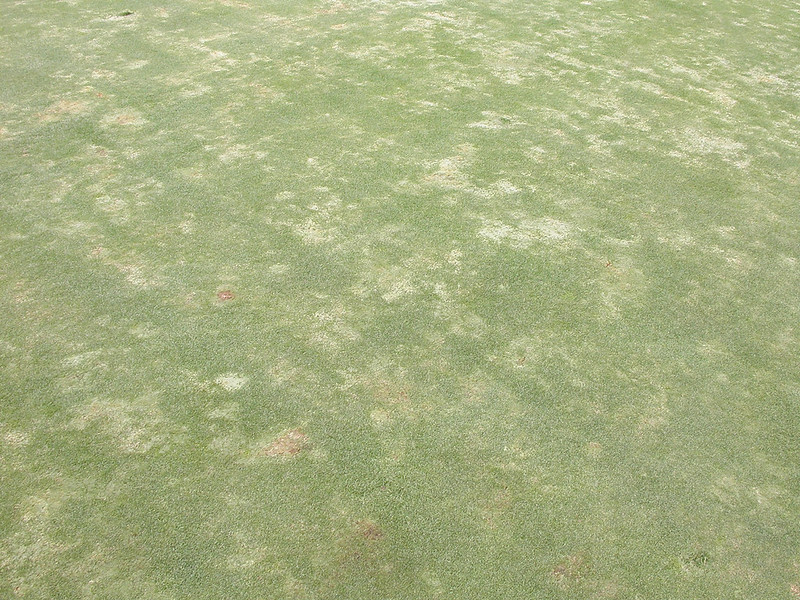
Moss
Bryum, Hypnum and other genera
Primitive plants that colonize thin, weak turf; an indicator of poor growing conditions rather than a true competitor.
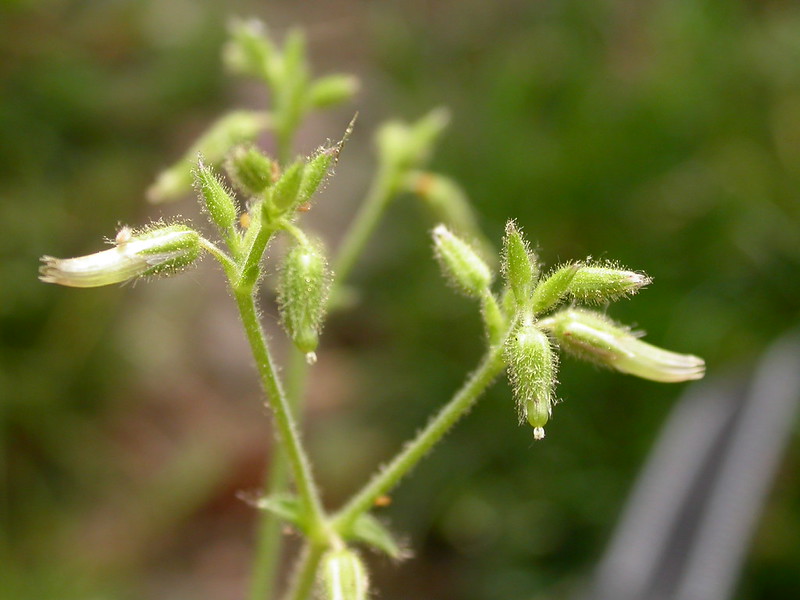
Mouseear chickweed
Cerastium fontanum
A low, mat-forming perennial with small hairy leaves; tougher and more persistent than common chickweed.
Mugwort
Artemisia vulgaris
An aggressive rhizomatous perennial of roughs and edges with aromatic, deeply lobed leaves that are silvery-white beneath; very hard to control.
Nimblewill
Muhlenbergia schreberi
A wiry warm-season perennial grass that forms light-green patches and goes straw-tan when dormant.
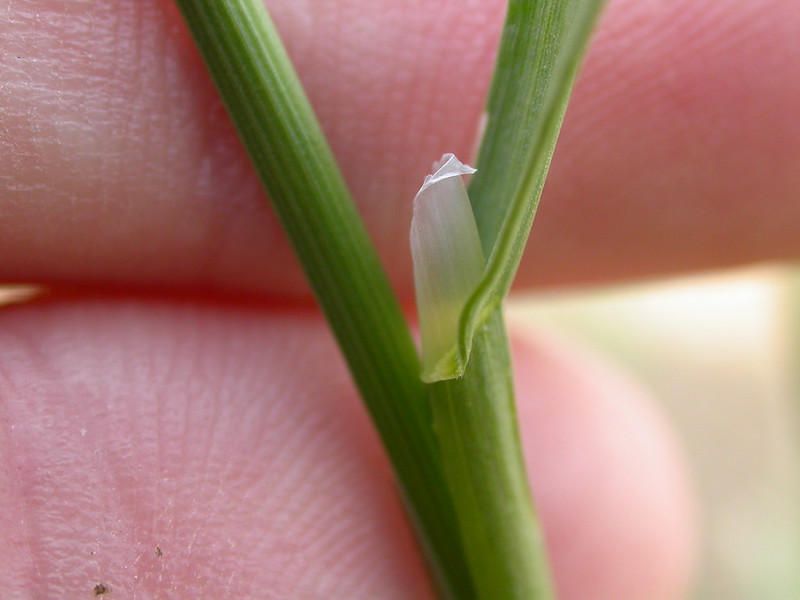
Orchardgrass
Dactylis glomerata
A coarse, clumpy cool-season grass that creates rough texture and disrupts turf uniformity.
Path rush
Juncus tenuis
A wiry rush perennial that thrives on compacted soils — paths, cart tracks, and worn areas — where turf struggles to compete.
Pearlwort
Sagina procumbens
A low, moss-like perennial that forms tight cushions in closely mown fine turf — greens and tees — especially where the sward is thin.
Pennsylvania smartweed
Persicaria spp. (e.g., P. maculosa, P. pensylvanica)
An upright-to-spreading summer annual of wet, compacted, thin turf, recognized by swollen jointed nodes with a papery sheath and pink flower spikes.
Perennial ryegrass (as weed)
Lolium perenne
A desirable turf species that becomes weedy when coarser or less resilient than surrounding turf in fine-turf or premium lawn settings.
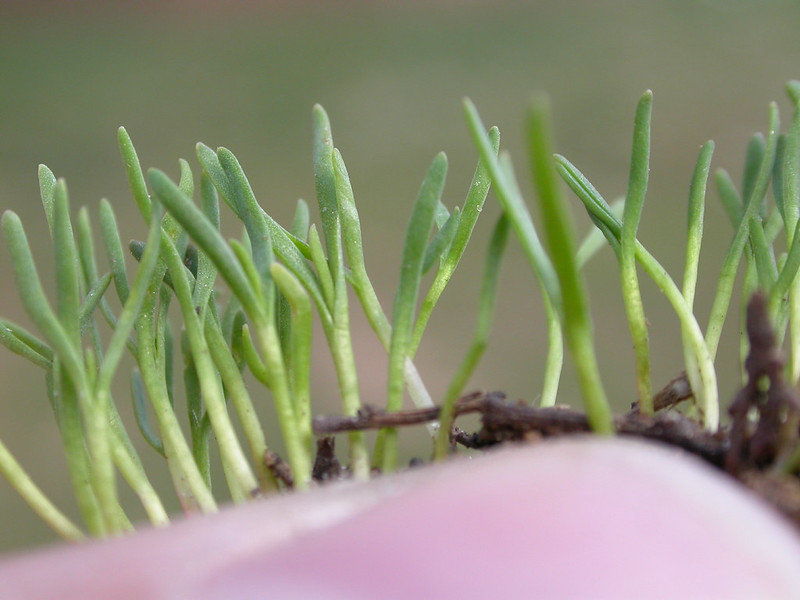
Prostrate knotweed
Polygonum aviculare
A wiry mat-forming summer annual that thrives in compacted soil and is an indicator of compaction.

Purple deadnettle
Lamium purpureum
A winter annual mint similar to henbit but with petioled, triangular upper leaves tinged purple.
Purple nutsedge
Cyperus rotundus
An aggressive sedge spreading by chains of tubers; one of the worlds worst weeds.
Quackgrass
Elymus repens
An aggressive cool-season perennial grass spreading by long white rhizomes, very hard to remove.
Red (sheep) sorrel
Rumex acetosella
A creeping perennial with arrowhead-shaped leaves and reddish seed heads; an indicator of acidic, low-fertility soils.
Roughstalk bluegrass
Poa trivialis
A light-green perennial grass that creeps into cool-season turf as patches, then collapses to straw in summer heat.
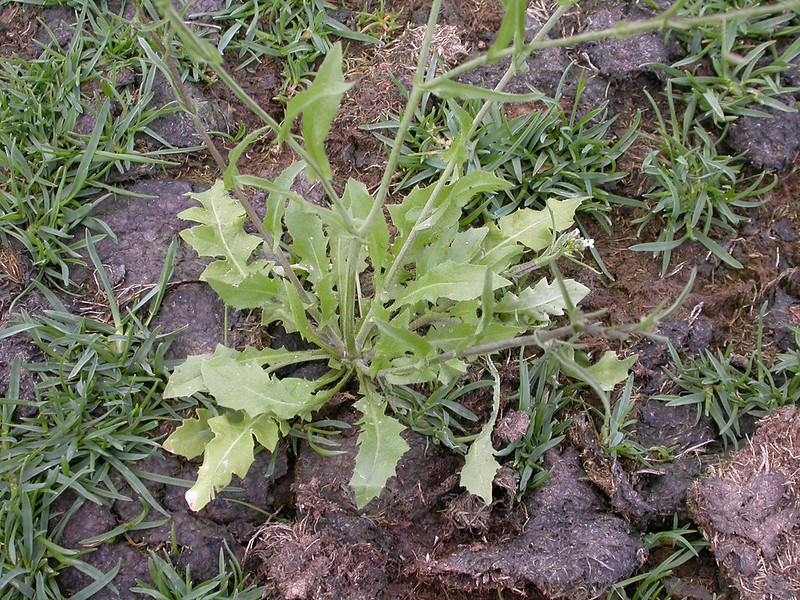
Shepherd's purse
Capsella bursa-pastoris
A cool-season winter annual of thin turf, recognized by its rosette of lobed leaves and slender stalks of heart-shaped (purse-like) seed pods.
Smutgrass
Sporobolus indicus
A tough, bunch-forming warm-season perennial grass named for the black sooty fungus that coats its narrow seed heads in late summer.
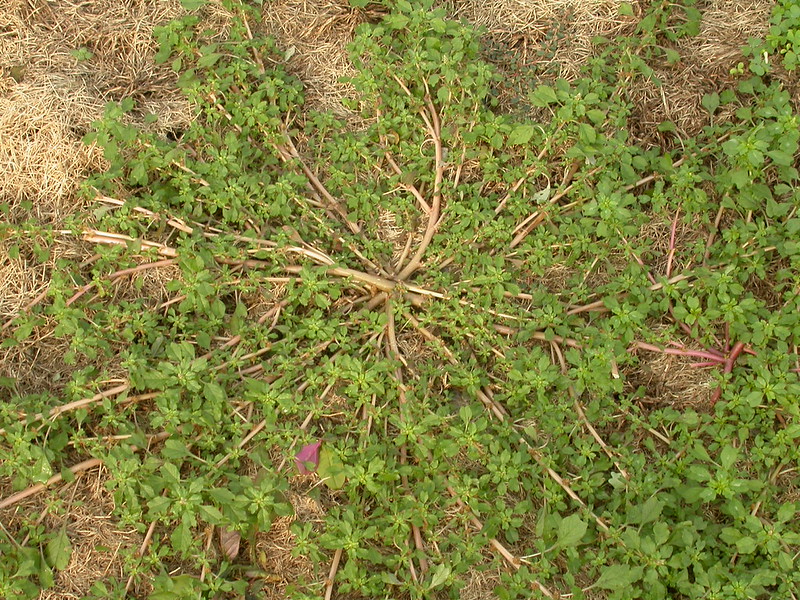
Spotted spurge
Euphorbia maculata
A prostrate summer annual with milky sap forming dense mats from a central taproot.
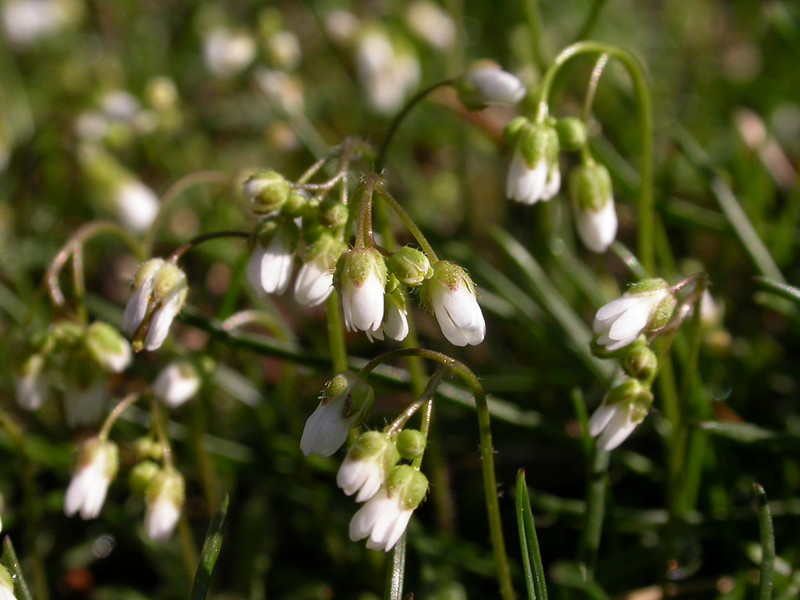
Spring whitlowgrass
Draba verna
A tiny winter-annual mustard forming ground rosettes with thin stalks of small white flowers in very early spring.
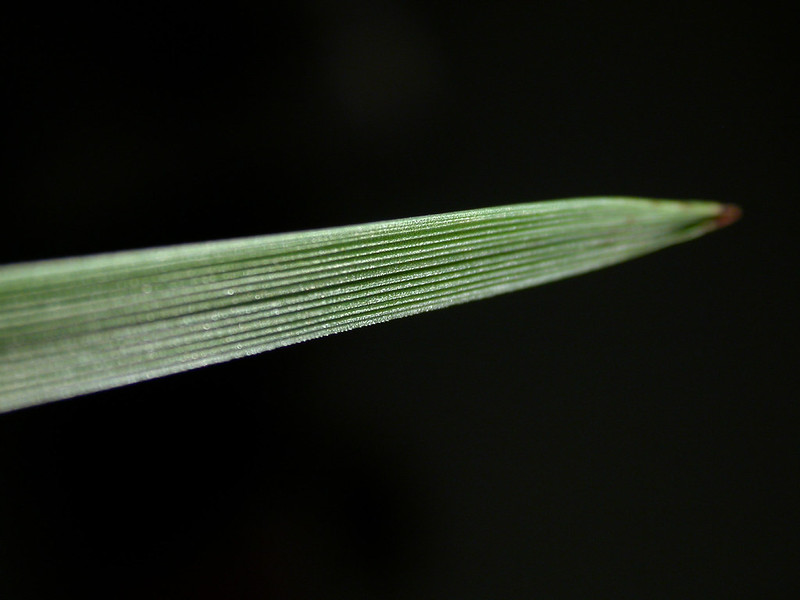
Tall fescue (as a weed)
Schedonorus arundinaceus
A desirable turf in its own right, but coarse-bladed clumps are a weed in fine-textured bluegrass/bentgrass stands.
Torpedograss
Panicum repens
One of the most aggressive invasive grasses of the Gulf Coast, spreading by sharp, soil-spearing rhizomes that are very hard to eradicate.
Virginia buttonweed
Diodia virginiana
A deep-rooted, mat-forming perennial of wet sites that tolerates very low mowing and is one of the hardest broadleaf weeds to control in southern turf.
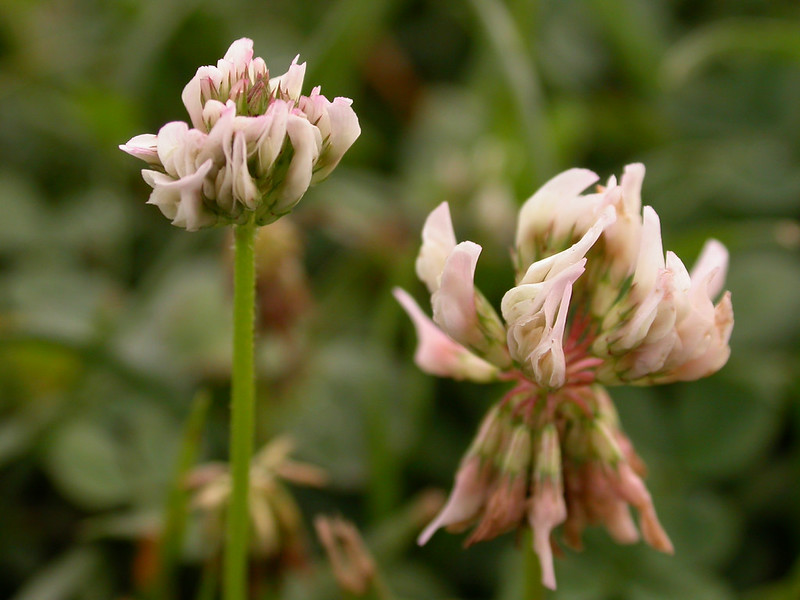
White clover
Trifolium repens
A creeping nitrogen-fixing legume with trifoliate leaves and white flowers that thrives in low-N turf.
Wild garlic & wild onion
Allium vineale / Allium canadense
Perennial bulb weeds with slender waxy leaves and a strong onion/garlic odor that stand above the turf in clumps.
Wild violet
Viola spp.
A waxy-leaved perennial with purple flowers and rhizomes, notoriously hard to control.
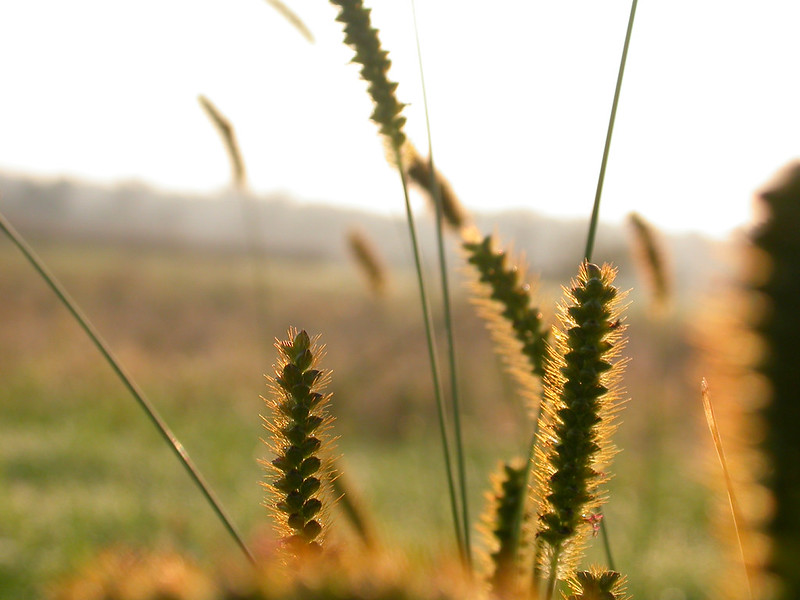
Yellow foxtail
Setaria pumila
A summer-annual grass with a bristly, foxtail-like seed head, common in thin or newly seeded turf.
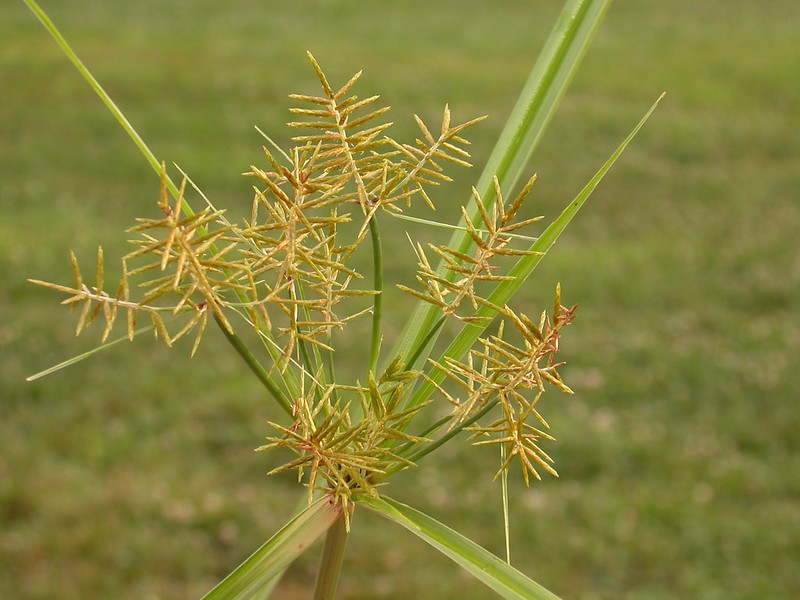
Yellow nutsedge
Cyperus esculentus
A fast-growing sedge (not a true grass) that emerges above turf in wet areas after rain or irrigation.
Yellow woodsorrel (oxalis)
Oxalis stricta
A clover-like weed with heart-shaped leaflets, yellow flowers, and explosive seed capsules.
Zoysia (as weed)
Zoysia spp.
An aggressive warm-season grass used in the South that becomes a serious weed in cool-season turf, spreading slowly but relentlessly.