
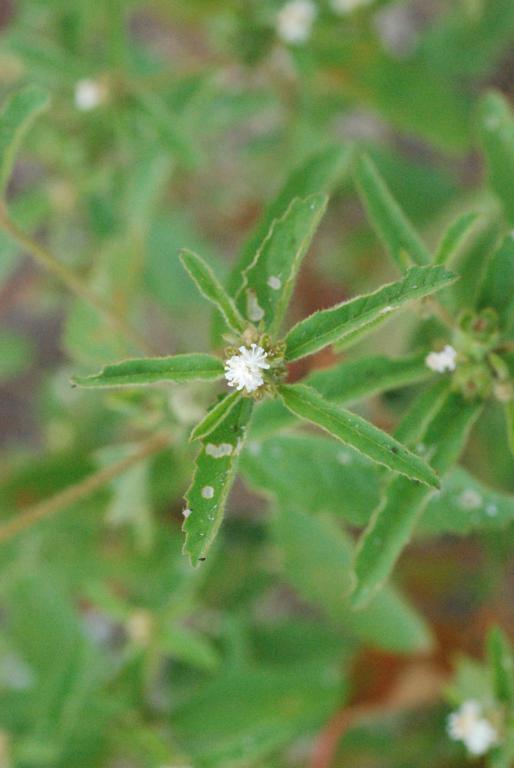
Tropic croton
Croton glandulosus
A branching summer-annual broadleaf of the spurge family common in southern fields, beds, and thin turf.
Identification
An erect, freely branching summer annual with alternate, oblong, toothed leaves bearing two small gland-tipped projections at the leaf base (near the petiole junction) and rough, star-shaped hairs. Small flowers cluster at branch tips, followed by three-lobed capsules. The basal leaf glands and rough hairs help identify it.
Symptoms & Damage
Branching, rough-hairy broadleaf plants appear in thin warm-season turf, beds, and sandy ground, competing and reseeding through the season.
Biology
A prolific seed-reproducing summer annual that can complete its cycle quickly and reseed multiple times per season, building a persistent seed bank.
Occurrence & Spread
A common weed of the southern US in row crops, gardens, nurseries, sandy disturbed ground, and thin warm-season turf; favored by heat, open canopies, and sandy soils.
Favorable Conditions
Warm, sandy, open, disturbed soils.
Cultural Management
Maintain dense turf and mow regularly to exclude it; reseed thin areas. Cultivate or hand-pull seedlings in beds and margins before seed set; mulch beds to suppress germination.
Further Reading
University extension resources — open in a new tab.
Related Reports
No published reports yet for this pest.
Reports will appear here as they are peer-reviewed and published.