
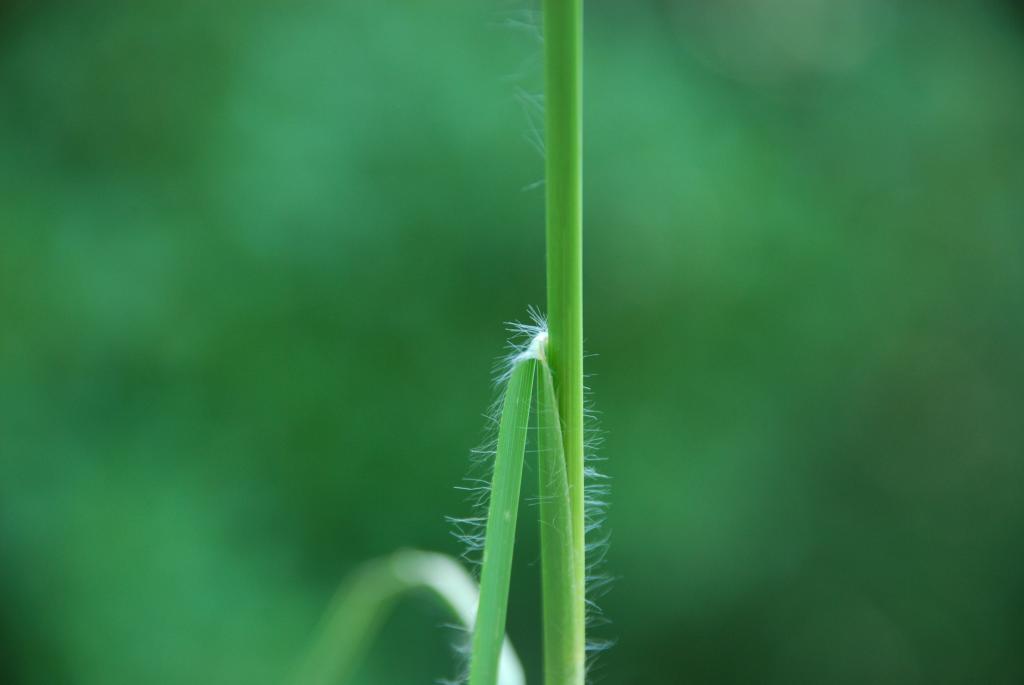
Broomsedge
Andropogon virginicus
A native perennial bunchgrass of low-fertility sites that turns distinctive orange-tan in winter.
Identification
A warm-season perennial that grows in erect clumps (bunches) with flattened, folded leaf sheaths and blades that are green in summer and cure to a conspicuous orange-tan or coppery color that persists through winter, making infestations obvious in dormant landscapes. Fluffy, silvery-white tufted seeds cling along the upper stems in fall. Its bunching habit and winter color are diagnostic.
Symptoms & Damage
Erect bunchgrass clumps that turn bright orange-tan in fall and winter stand out in roughs and low-fertility turf, indicating poor soil and crowding weak turf.
Biology
A perennial reproducing by seed (wind-dispersed) and by expanding crowns; establishes readily on poor soils and persists for years once rooted.
Occurrence & Spread
A classic indicator of low-fertility, acidic, poorly maintained, or droughty soils — abandoned fields, roughs, roadsides, and neglected turf; it thrives where desirable turf is weak from low nutrition (especially low phosphorus) and low pH.
Favorable Conditions
Low fertility, low pH, droughty or neglected soils.
Cultural Management
Because broomsedge signals poor soil, the primary control is correcting fertility and pH: soil-test and apply lime and balanced fertilizer to build a competitive desirable stand that crowds it out. Established clumps can be dug out; improving fertility over time is the durable fix, since broomsedge loses its competitive edge on well-nourished soils.
Further Reading
University extension resources — open in a new tab.
Related Reports
No published reports yet for this pest.
Reports will appear here as they are peer-reviewed and published.