Johnsongrass
Sorghum halepense
An aggressive, tall, rhizomatous perennial grass that spreads by thick rhizomes and abundant seed.
Identification
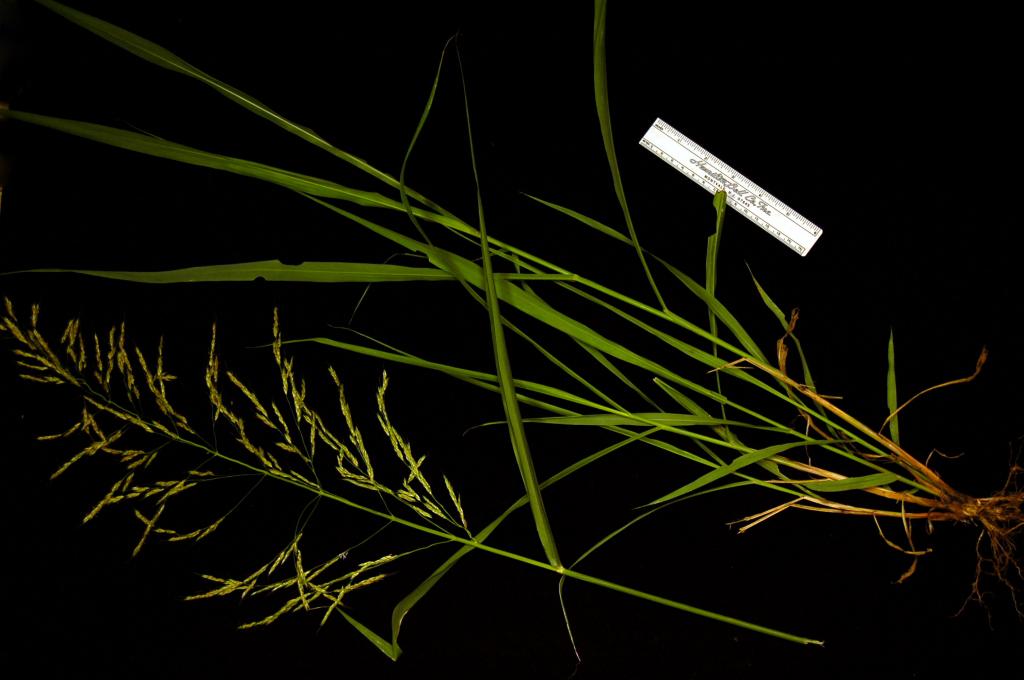
A robust warm-season perennial grass growing tall in clumps and patches, with wide leaf blades bearing a prominent white midrib, a membranous ligule, and stout, scaly, spreading underground rhizomes. The seedhead is a large, open, purplish to reddish panicle. Its size, white-midribbed wide blades, and thick creeping rhizomes are diagnostic; it is a listed noxious weed in many states.
Symptoms & Damage
Tall, rhizomatous grass with white-midribbed blades forms persistent patches in roughs, margins, and thin turf, regrowing from rhizomes.
Biology
A perennial spreading aggressively by extensive thick rhizomes and by abundant seed; rhizomes store energy and resprout vigorously, letting it form persistent patches that regrow after mowing or top removal. Young growth can contain toxic levels of prussic acid, poisoning livestock.
Occurrence & Spread
A weed of field edges, ditch banks, roadsides, roughs, and disturbed ground across the US; regular mowing suppresses top growth in turf but the rhizomes let it persist. Favored by warmth, fertility, and disturbance.
Favorable Conditions
Warm, fertile, disturbed ground; rhizomes aid spread.
Cultural Management
Mowing suppresses seedheads and top growth but the rhizomes resprout, so repeated cutting over time is needed to weaken patches; prevent seed set and clean equipment to limit rhizome/seed spread. Maintain competitive vegetation on margins.
Further Reading
University extension resources — open in a new tab.
Related Reports
No published reports yet for this pest.
Reports will appear here as they are peer-reviewed and published.