
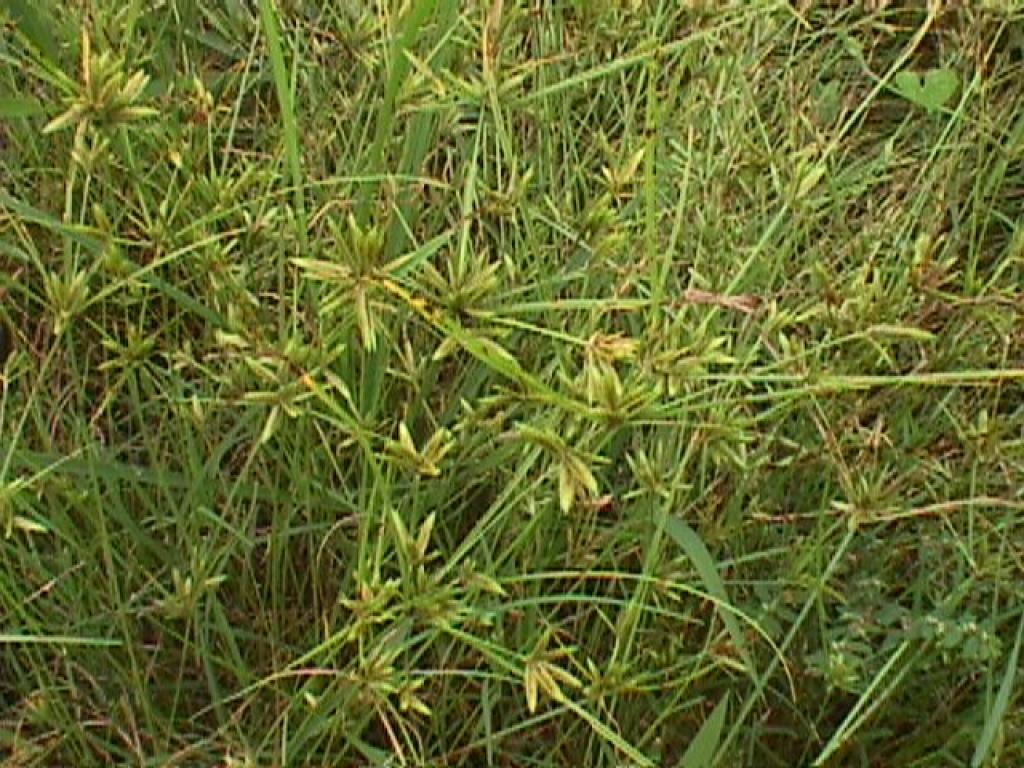
Annual sedge
Cyperus compressus
A tufted summer-annual sedge with flattened spikelets that invades thin, moist warm-season turf.
Identification
A small, tufted summer-annual sedge with a triangular stem (sedges have edges) and grass-like basal leaves, topped by a cluster of flattened, straw-colored spikelets arranged in finger-like clusters subtended by leaf-like bracts. Unlike perennial nutsedges it lacks tubers and rhizomes, growing instead as a fibrous-rooted annual clump. Its flat, compressed spikelets and annual, tuberless habit distinguish it.
Symptoms & Damage
Tufted, triangular-stemmed sedge clumps with flat spikelets appear in moist, thin warm-season turf, indicating wet or poorly drained conditions.
Biology
A seed-reproducing summer annual (no tubers), germinating as soils warm and completing its cycle in one season; reseeds into thin, moist turf.
Occurrence & Spread
A weed of moist, thin, warm-season turf, wet spots, and disturbed ground in the southern US; favored by excess moisture, poor drainage, and open canopies.
Favorable Conditions
Wet, poorly drained, thin turf.
Cultural Management
Improve drainage and avoid overwatering, since it favors wet sites; maintain a dense stand and mow appropriately to shade the soil. Because it is a fibrous-rooted annual without tubers, hand-pulling is effective when done before seed set.
Further Reading
University extension resources — open in a new tab.
Related Reports
No published reports yet for this pest.
Reports will appear here as they are peer-reviewed and published.