Oriental false hawksbeard
Youngia japonica
A rosette-forming annual with lobed dandelion-like leaves and slender stalks of small yellow flower heads.
Identification
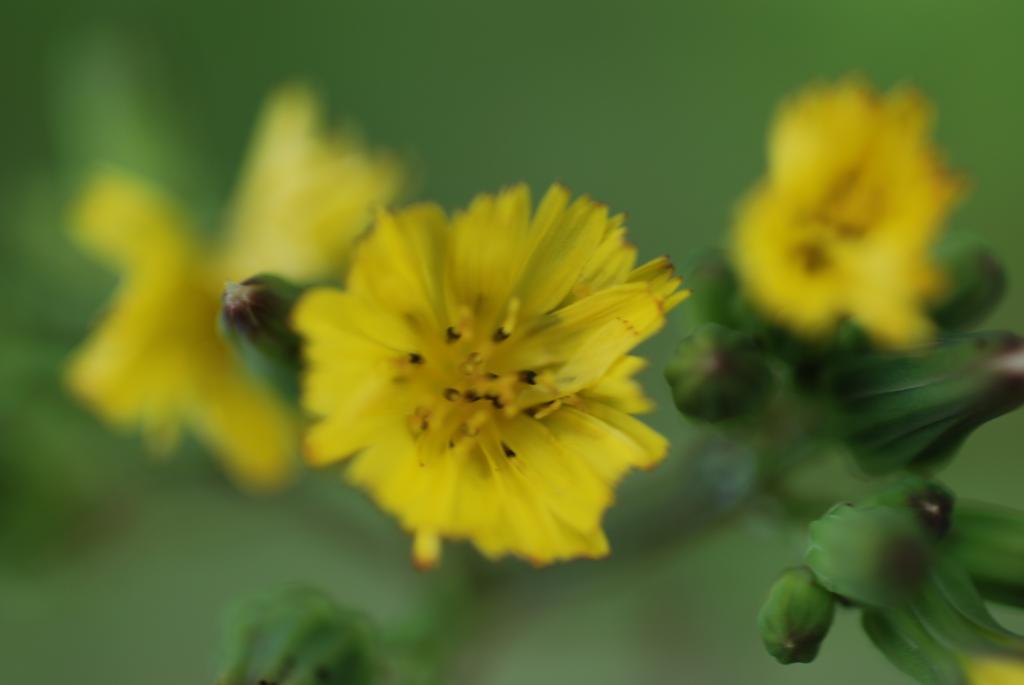
An annual (or winter annual) forming a basal rosette of deeply lobed, dandelion-like leaves, from which arise slender, mostly leafless branched flowering stalks bearing numerous small yellow dandelion-like flower heads that mature to tiny puffball seedheads; broken tissue has milky sap. Its basal rosette with tall, branched, small-headed flower stalks distinguishes it from true dandelion (single large head, single stalk) and sowthistle.
Symptoms & Damage
Dandelion-like rosettes with tall, branched stalks of small yellow heads appear in warm-season turf and beds, producing abundant wind-blown seed.
Biology
A prolific seed-reproducing annual that can flower much of the year in mild climates, producing abundant wind-blown seed and multiple generations, building up quickly in turf and beds.
Occurrence & Spread
An increasingly common weed of warm-season and transition-zone turf, landscape beds, nurseries, and container stock in the southern US; favored by moisture, shade, disturbance, and thin or open turf, and spread by wind-blown seed.
Favorable Conditions
Moist, shaded, disturbed, thin or open turf and beds.
Cultural Management
Maintain a dense, vigorous stand to prevent rosette establishment; mow before seedheads mature to limit wind-blown seed. Hand-pull rosettes and remove plants from beds and container stock before flowering; mulch beds.
Further Reading
University extension resources — open in a new tab.
Related Reports
No published reports yet for this pest.
Reports will appear here as they are peer-reviewed and published.