Hairy fleabane
Erigeron bonariensis (syn. Conyza bonariensis)
An upright, hairy composite weed closely resembling horseweed, prone to herbicide resistance.
Identification
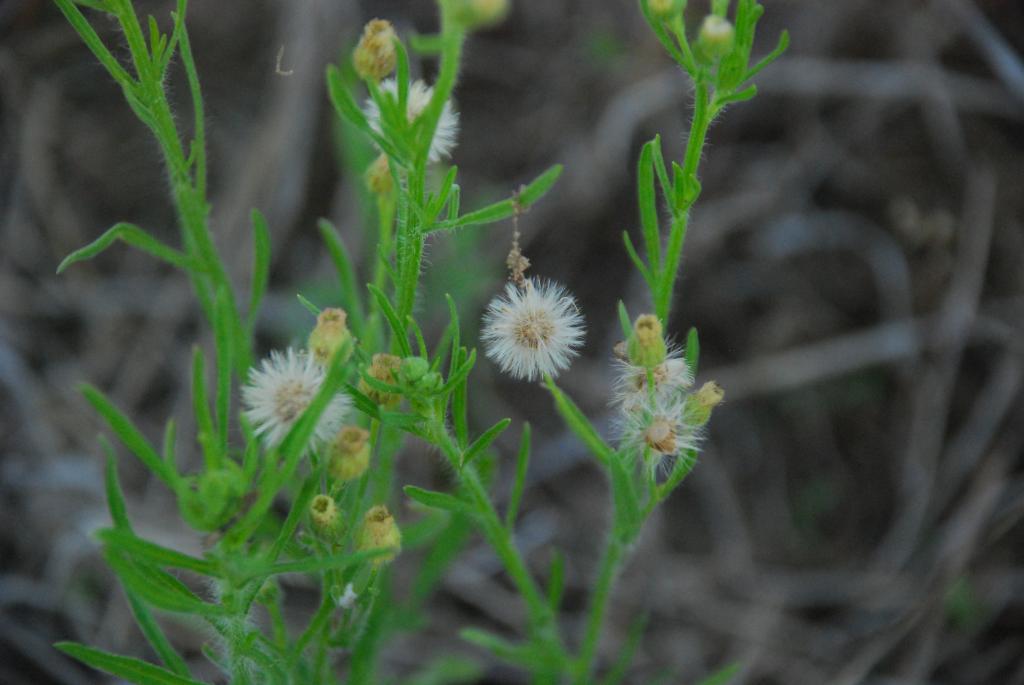
An erect annual or biennial with a basal rosette of grayish, hairy, narrow leaves that gives way to a branched flowering stalk; the upper branches often overtop the main stem, giving a flat-topped or candelabra appearance. Numerous small, inconspicuous flower heads produce wind-blown, parachute-tipped seeds. It is very similar to horseweed but is generally shorter, grayer, and more densely hairy with a more branched top.
Symptoms & Damage
Erect, hairy, gray-green composite plants with wind-blown seed appear in thin turf, hardscapes, and margins, reseeding widely.
Biology
Reproduces by abundant wind-dispersed seed; germinates in fall or spring, overwinters as a rosette, and bolts to flower. Known for evolving resistance to glyphosate and other herbicides.
Occurrence & Spread
A weed of disturbed, open ground, roadsides, hardscapes, roughs, and thin turf, spreading readily by wind-blown seed; favored by minimum-tillage and non-selective-herbicide-reliant management, which selects for resistance.
Favorable Conditions
Open, disturbed ground; reliance on non-selective herbicides.
Cultural Management
Maintain dense turf to prevent seedling establishment; mow to prevent flowering and seed set in turf and on margins. Control rosettes early, before bolting, since large plants are difficult; manage seed sources on adjacent disturbed ground.
Further Reading
University extension resources — open in a new tab.
Related Reports
No published reports yet for this pest.
Reports will appear here as they are peer-reviewed and published.