
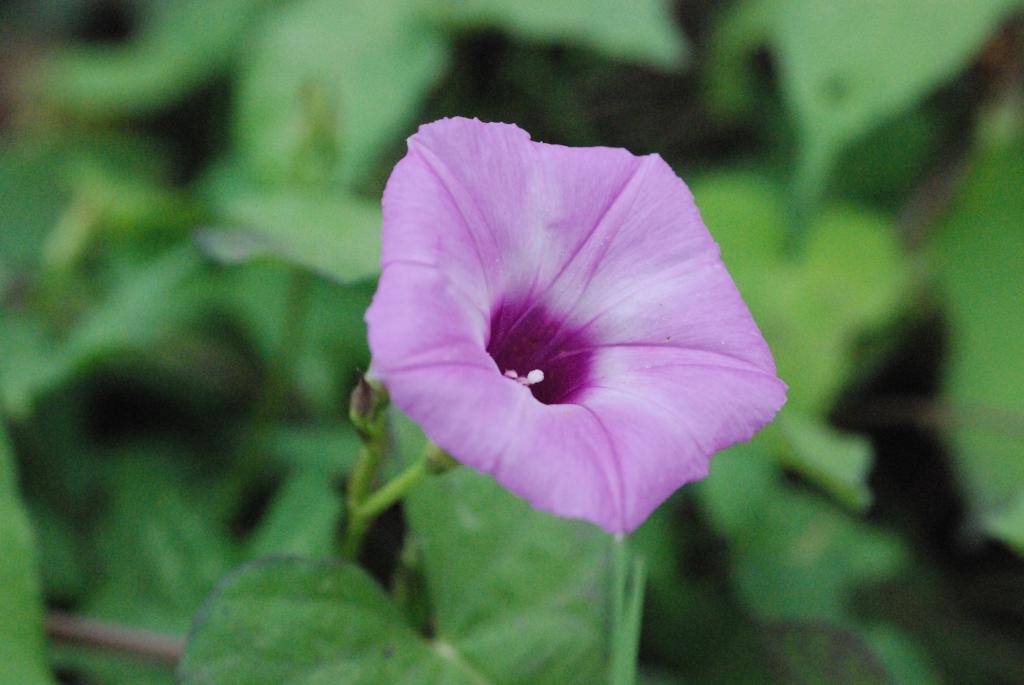
Cotton morningglory (Torrey's morningglory)
Ipomoea trichocarpa var. torreyana (aff. I. cordatotriloba)
A twining morningglory of the southern US with lobed or heart-shaped leaves and pink to lavender flowers.
Identification
A twining vine with variable leaves that may be heart-shaped or three-lobed and often somewhat hairy, bearing funnel-shaped flowers in shades of pink to lavender or pale purple with a darker throat. It can behave as a persistent perennial from a root in mild climates. The hairy stems, variable lobed leaves, and pink-lavender flowers help identify it.
Symptoms & Damage
Twining vines with lobed or heart-shaped leaves and pink-lavender flowers climb over margins, beds, and fences, reseeding and sometimes persisting from a root.
Biology
Reproduces by seed and, in mild climates, can persist from a perennial root; twines over vegetation and reseeds via hard-coated seed.
Occurrence & Spread
A weed of southern fields, fence lines, beds, roughs, and disturbed edges; a margin climber rather than a mowed-turf weed, and one of the more troublesome perennial-tending morningglories in the region.
Favorable Conditions
Warm, open, disturbed edges and beds.
Cultural Management
Mowing controls it in turf, but where it persists from a root, repeated removal is needed. On margins and beds, pull or cut vines before seed set and remove young plants from shrubs; cultivate/mulch beds.
Further Reading
University extension resources — open in a new tab.
Related Reports
No published reports yet for this pest.
Reports will appear here as they are peer-reviewed and published.