
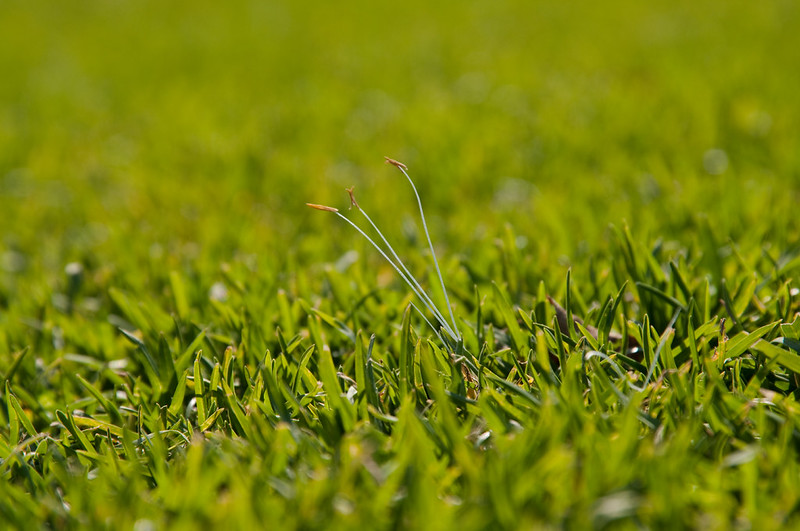
Kikuyugrass
Pennisetum clandestinum
An aggressive warm-season grass that invades cool-season turf, forming dense, rough, weedy patches.
Identification
Kikuyugrass is a densely tufted, stoloniferous warm-season grass with fine, wiry, light-green blades and a velvety texture when young. It spreads rapidly by above-ground stolons and below-ground rhizomes, forming a thick, close-knit mat. The plant is low-growing and fine in texture, but its aggressive spread and distinct growth habit set it apart in cool-season turf. Seed heads are inconspicuous and rarely produced in most turf situations.
Symptoms & Damage
Kikuyugrass forms aggressive, expanding patches of fine-textured but noticeably different growth that stand out sharply against cool-season turf. The patches are often light green or yellowish and grow so vigorously and densely that they suppress cool-season grass, create an uneven, patchy lawn, and can eventually dominate large areas. Winter dormancy leaves dead, brown patches when cool-season turf is green, creating severe aesthetic damage.
Biology
Kikuyugrass is an aggressive warm-season perennial that spreads vigorously by both stolons (runners) and rhizomes (underground shoots). It grows fastest during warm months and goes dormant (brown) when temperatures cool, making it extremely weedy in cool-season regions where it dies back while desirable grass is actively growing.
Occurrence & Spread
Kikuyugrass is often introduced intentionally as a turf species in warm climates, but it becomes a serious weed in cool-season regions and transition zones. It spreads from neighboring turf, landscape plantings, or contaminated sod/seed, and once established it is difficult to control because the extensive rhizome and stolon network allows rapid expansion and recovery from disturbance.
Favorable Conditions
Warm, mild climates; transitions zones; moist soils; thin or stressed cool-season turf.
Cultural Management
In cool-season regions, kikuyugrass patches are best removed by digging out and disposing of all plant material (runners, rhizomes, and roots), down to several inches depth; any fragments left in the soil can regenerate. The excavated area must be refilled and reseeded with cool-season grass. For small patches, prompt hand-removal can prevent spread. Avoid practices that stress cool-season turf, such as scalping or underwatering, which create openings for kikuyugrass expansion. In transition zones, intensive cool-season turf management can slow spread.
Further Reading
University extension resources — open in a new tab.
Related Reports
No published reports yet for this pest.
Reports will appear here as they are peer-reviewed and published.