Horseweed (marestail)
Erigeron canadensis (syn. Conyza canadensis)
A tall, upright composite weed with numerous small flower heads and wind-blown seed, widely glyphosate-resistant.
Identification
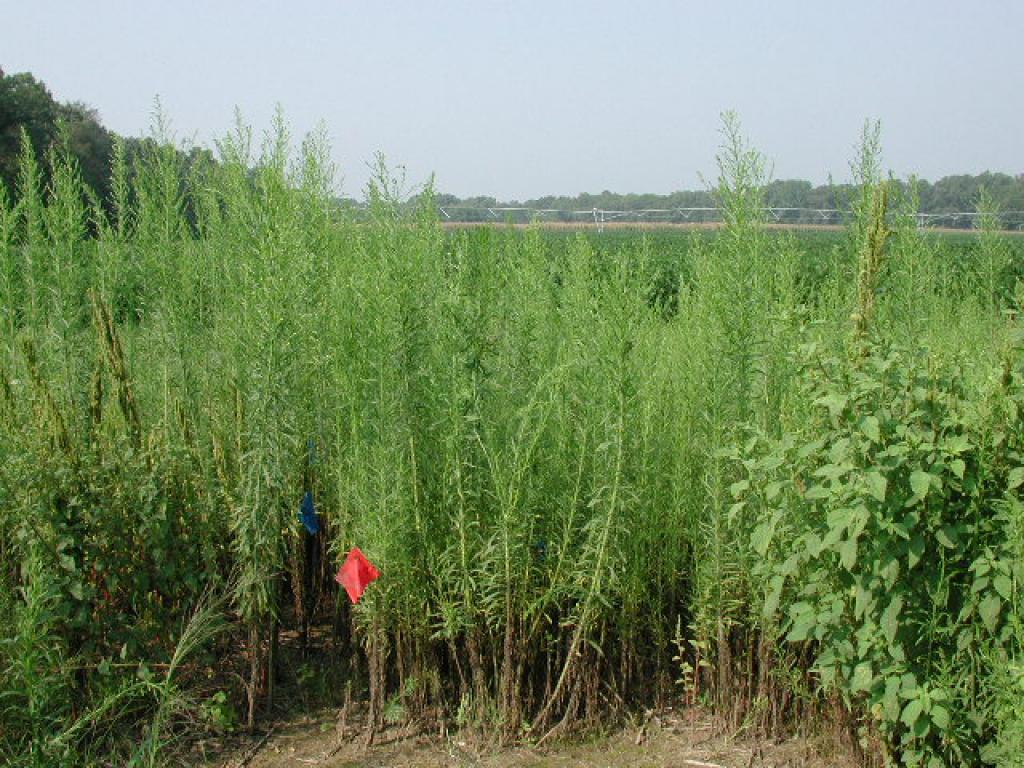
An erect annual that begins as a basal rosette and bolts into a single tall, unbranched (until the top) stem lined with numerous narrow, hairy, alternate leaves that lack petioles. The top branches into many small flower heads that produce abundant parachute-tipped, wind-dispersed seeds. Its tall single stem clothed in narrow leaves and topped by many tiny heads is diagnostic.
Symptoms & Damage
Tall, narrow-leaved composite plants with many small heads appear in thin turf, margins, and hardscapes, shedding wind-blown seed that spreads widely.
Biology
Reproduces by copious wind-blown seed; germinates in fall or spring, overwinters as a rosette (winter annual) or grows through summer, then bolts and flowers. A leading species for evolved glyphosate resistance.
Occurrence & Spread
Extremely common on disturbed, open ground — no-till fields, roadsides, hardscapes, roughs, and thin turf; favored by open canopies and heavy reliance on non-selective herbicides, which has selected widespread resistance.
Favorable Conditions
Open, disturbed ground; non-selective-herbicide reliance.
Cultural Management
A dense turf canopy prevents establishment, and regular mowing eliminates it from maintained turf, so it is chiefly a rough, margin, and hardscape weed. Control rosettes early; manage seed sources nearby since seed travels far on the wind.
Further Reading
University extension resources — open in a new tab.
Related Reports
No published reports yet for this pest.
Reports will appear here as they are peer-reviewed and published.