
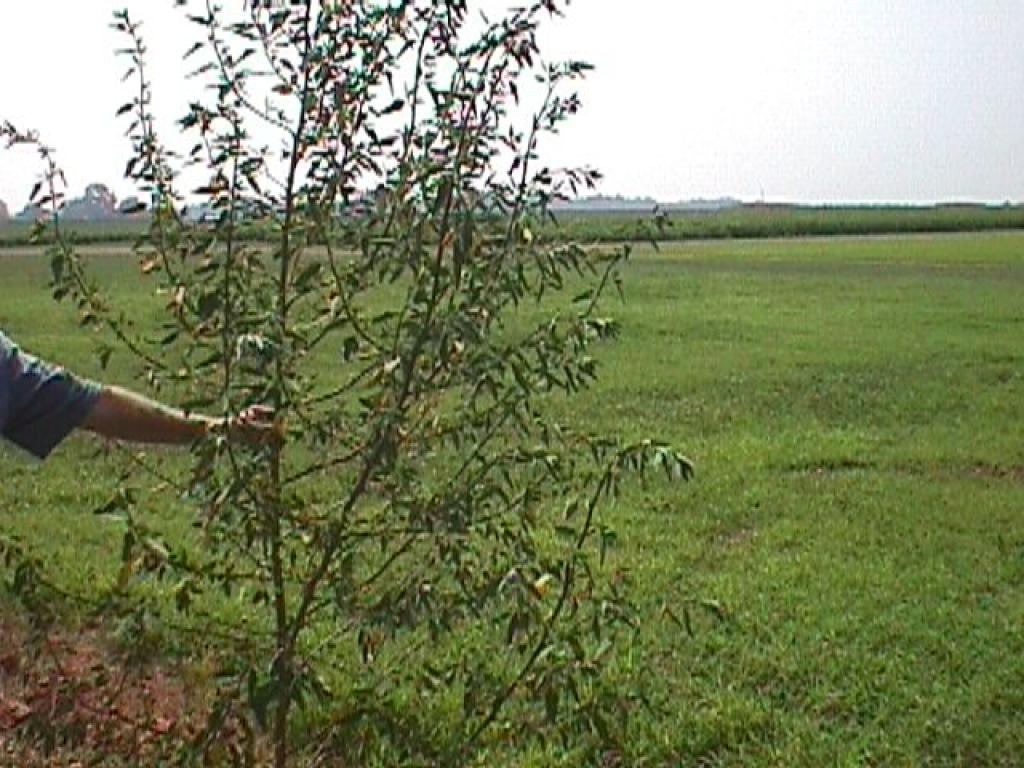
Common lambsquarters
Chenopodium album
An erect summer-annual broadleaf with mealy, whitish-coated leaves, common on fertile disturbed ground.
Identification
An erect, branching summer annual with alternate, roughly diamond- to triangular-shaped, often toothed leaves that bear a characteristic whitish, mealy or powdery coating, especially on the undersides and growing tips, which sheds water. Stems are grooved and sometimes red-striped. Small greenish flowers form in dense clusters. The mealy white bloom on new leaves is diagnostic.
Symptoms & Damage
Erect broadleaf weeds with mealy, whitish new leaves appear in thin or new turf, beds, and disturbed ground, competing and reseeding heavily.
Biology
A prolific seed-reproducing summer annual (tens of thousands of long-lived seeds per plant) with a persistent seed bank; emerges from spring through summer.
Occurrence & Spread
One of the most common weeds of fertile, cultivated, and disturbed soils — gardens, fields, nurseries, and thin or newly seeded turf; favored by high fertility and open ground.
Favorable Conditions
Fertile, disturbed, sunny soils.
Cultural Management
A dense turf canopy prevents establishment, and regular mowing removes it from maintained turf, so it is chiefly a problem in thin, new, or bed areas. Cultivate or hand-pull seedlings before seed set to limit the large seed bank; mulch beds.
Further Reading
University extension resources — open in a new tab.
Related Reports
No published reports yet for this pest.
Reports will appear here as they are peer-reviewed and published.