Carolina horsenettle
Solanum carolinense
A spiny perennial nightshade with star-shaped white-purple flowers, yellow berries, and spreading roots; toxic.
Identification
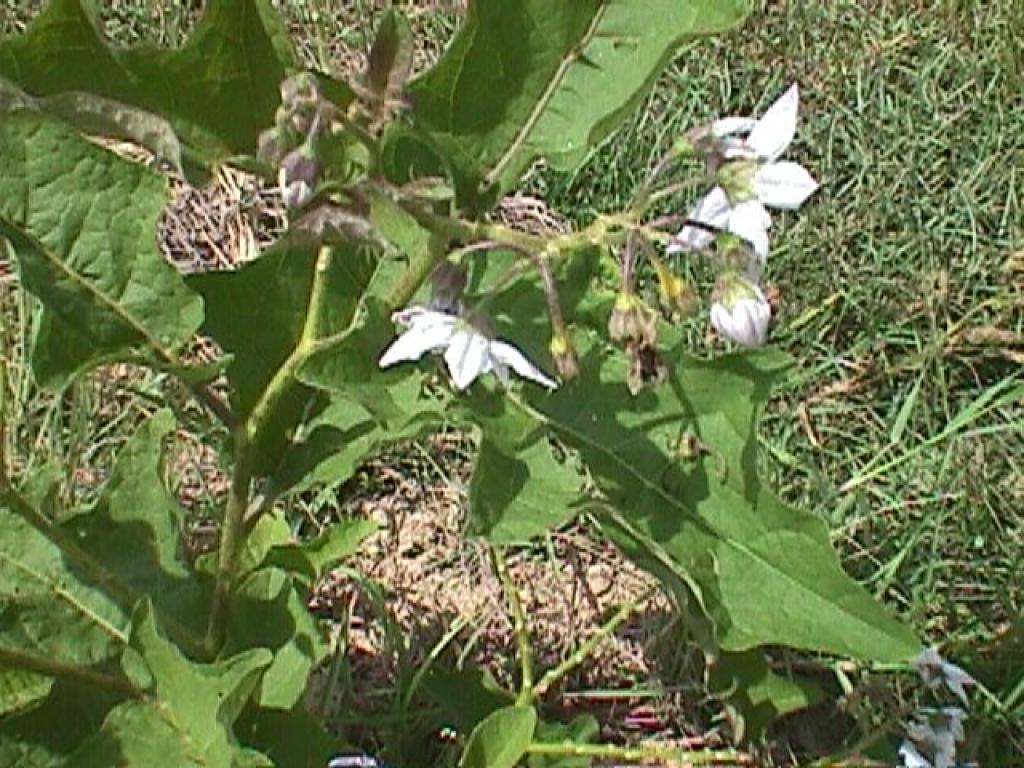
An erect perennial nightshade armed with sharp yellowish spines (prickles) on the stems and along the leaf midribs and veins, with alternate, coarsely lobed leaves, star-shaped white to pale-purple flowers with prominent yellow anthers, and smooth yellow berries resembling tiny tomatoes. The spiny stems and midribs, star flowers, and yellow berries are diagnostic. All parts, especially berries, are toxic.
Symptoms & Damage
Spiny perennial nightshade with star flowers and yellow berries persists in turf, roughs, and pastures, spreading by roots; all parts toxic.
Biology
A perennial reproducing by seed and, importantly, by spreading horizontal roots that send up new shoots, allowing it to form colonies and regrow after top removal; root fragments resprout.
Occurrence & Spread
A weed of pastures, roadsides, roughs, ffield edges, and thin turf across much of the US; regular mowing suppresses top growth in turf but the perennial roots let it persist. A livestock-poisoning concern.
Favorable Conditions
Disturbed, open ground; perennial roots aid persistence.
Cultural Management
Mowing controls top growth in turf but roots resprout, so repeated removal over time is needed; digging must remove the spreading roots, and fragments left behind regrow. Maintain competitive vegetation on margins; wear gloves due to spines.
Further Reading
University extension resources — open in a new tab.
Related Reports
No published reports yet for this pest.
Reports will appear here as they are peer-reviewed and published.