
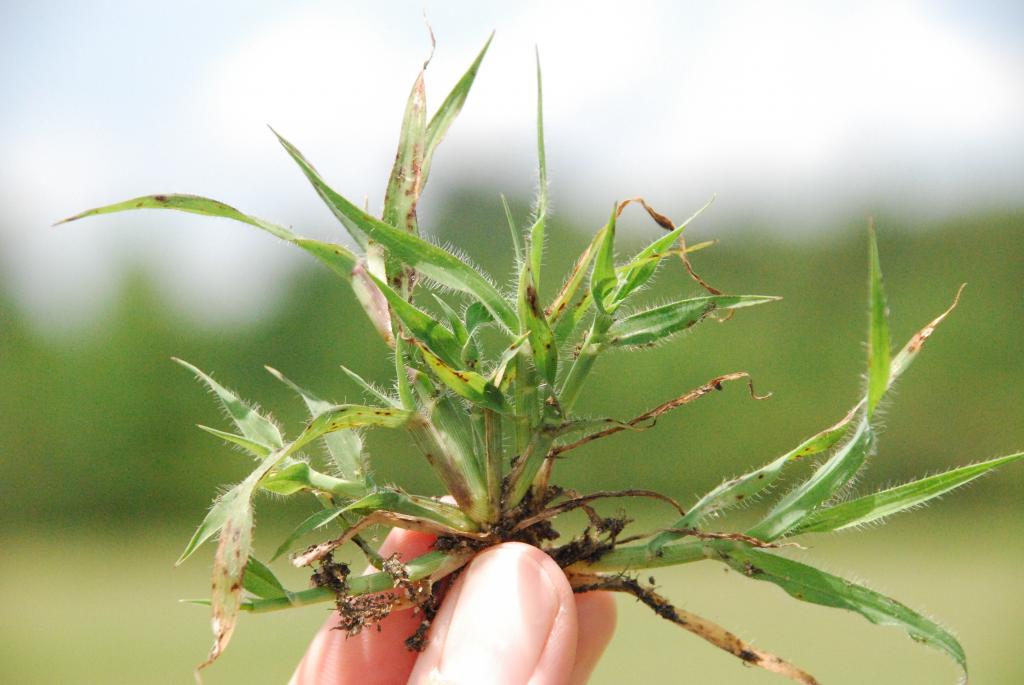
Crowfootgrass
Dactyloctenium aegyptium
A summer-annual grass with distinctive finger-like seed spikes that curve like a crow's foot, of sandy warm sites.
Identification
A spreading to ascending summer-annual grass that roots at the lower nodes, with folded leaf blades bearing scattered stiff hairs and a fringed membranous ligule. The seedhead is highly diagnostic: two to several short, thick finger-like spikes radiate from the stem tip like a bird's foot, each spike tipped by a short projecting point beyond the last seed. Its crow's-foot seedhead separates it from crabgrass and goosegrass.
Symptoms & Damage
Spreading grass with crow's-foot seedheads forms patches in sandy, thin warm-season turf, contrasting in texture and reseeding.
Biology
A summer annual reproducing by seed and node-rooting; germinates in warm soils and spreads to form patches, setting abundant seed.
Occurrence & Spread
A weed of sandy, warm, coastal, and disturbed soils, thin warm-season turf, and roadsides in the southern US; favored by heat, sandy soils, and open canopies.
Favorable Conditions
Sandy, hot, open, disturbed soils.
Cultural Management
Maintain a dense warm-season stand and reduce open, sandy, compacted areas; overseed and irrigate to build competition. Remove whole plants when hand-weeding since it roots at nodes.
Further Reading
University extension resources — open in a new tab.
Related Reports
No published reports yet for this pest.
Reports will appear here as they are peer-reviewed and published.