Common ragweed
Ambrosia artemisiifolia
A summer-annual broadleaf with fern-like leaves, a major source of allergenic pollen, invading thin turf and edges.
Identification
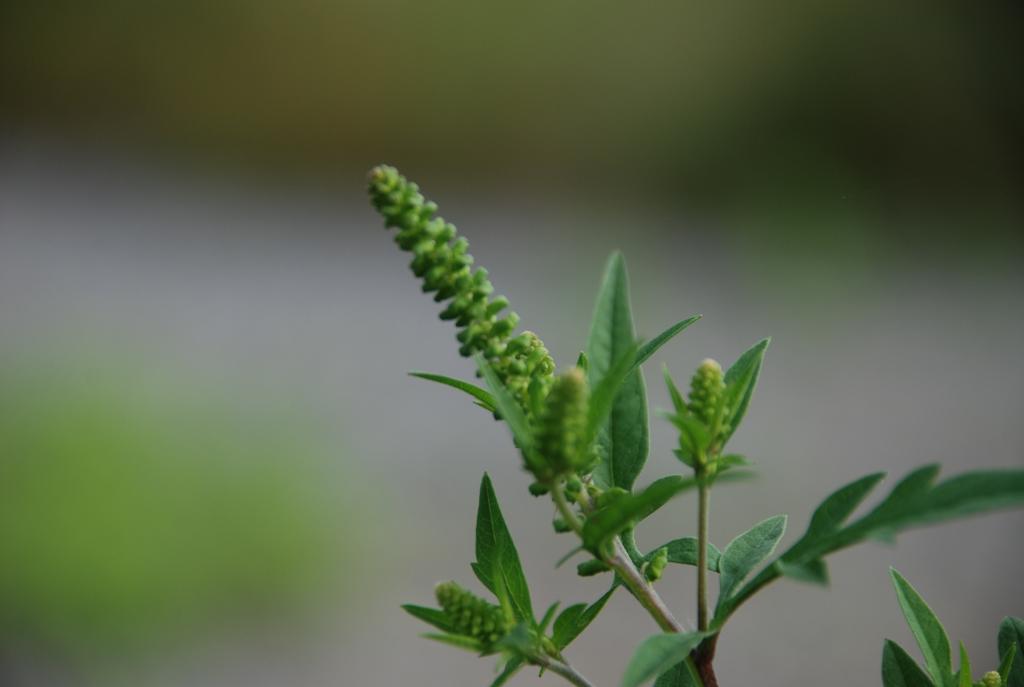
An erect, branching summer annual with deeply dissected, fern-like, often grayish-green leaves that are opposite below and alternate above. Inconspicuous greenish flowers are borne in slender terminal spikes; the wind-blown pollen is a leading cause of hay fever. Its finely divided foliage distinguishes it from giant ragweed, which has large three-lobed leaves.
Symptoms & Damage
Fern-leaved broadleaf plants appear in thin turf, roughs, and edges, competing with turf and producing large amounts of allergenic pollen in late summer.
Biology
A summer annual reproducing by seed, with a long-lived seed bank; emerges in spring and flowers in late summer, shedding copious allergenic pollen before frost kills the plant.
Occurrence & Spread
Abundant on disturbed, open ground — roadsides, fields, roughs, and thin turf; favored by low fertility, drought, and open canopies. Regular mowing keeps it out of maintained turf, so it is chiefly a rough and margin weed.
Favorable Conditions
Open, disturbed, low-fertility or drought-stressed sites.
Cultural Management
A dense, well-fertilized, properly mowed stand excludes ragweed; routine mowing prevents flowering and seed set in turf. On roughs and margins, mow before pollen shed and hand-pull or spot-treat young plants to limit seed production and allergenic pollen.
Further Reading
University extension resources — open in a new tab.
Related Reports
No published reports yet for this pest.
Reports will appear here as they are peer-reviewed and published.