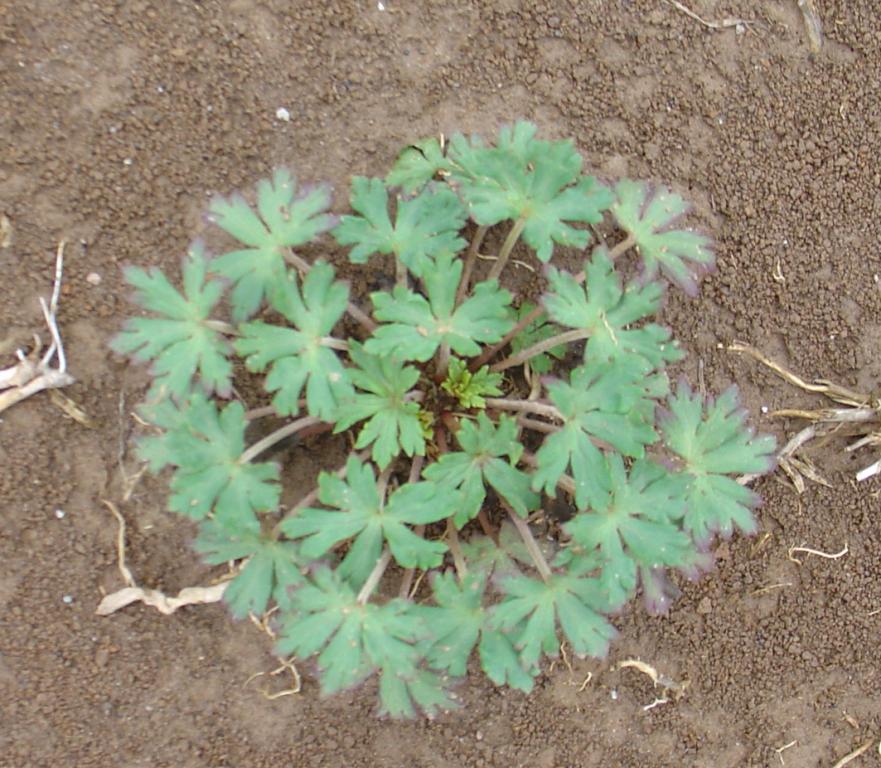
Carolina geranium
Geranium carolinianum
A cool-season annual with deeply divided, hairy leaves and beak-like seed pods (cranesbill).
Identification
An erect to branching winter annual with rounded leaves that are deeply palmately divided into narrow, toothed segments, borne on hairy, often reddish stems. Small pale pink to white five-petaled flowers give rise to the distinctive long, beak-like fruit (a cranesbill) that splits and springs open to fling seed. The dissected hairy leaves and beaked fruit are diagnostic.
Symptoms & Damage
Hairy, deeply divided-leaved plants with beak-like seed pods appear in thin turf and margins during cool seasons, reseeding in spring.
Biology
A seed-reproducing winter annual germinating in fall, overwintering as a rosette-like plant, and flowering and seeding in spring; the spring-loaded fruit disperses seed.
Occurrence & Spread
A common weed of thin turf, roadsides, nurseries, and disturbed ground across the US, appearing in cool seasons; favored by thin turf, open ground, and disturbance.
Favorable Conditions
Thin turf, open disturbed ground; cool seasons.
Cultural Management
Maintain a dense stand through fall and winter to prevent establishment; mow to limit flowering and seed. Hand-pull young plants in beds and thin turf before the beaked fruit matures.
Further Reading
University extension resources — open in a new tab.
Related Reports
No published reports yet for this pest.
Reports will appear here as they are peer-reviewed and published.