
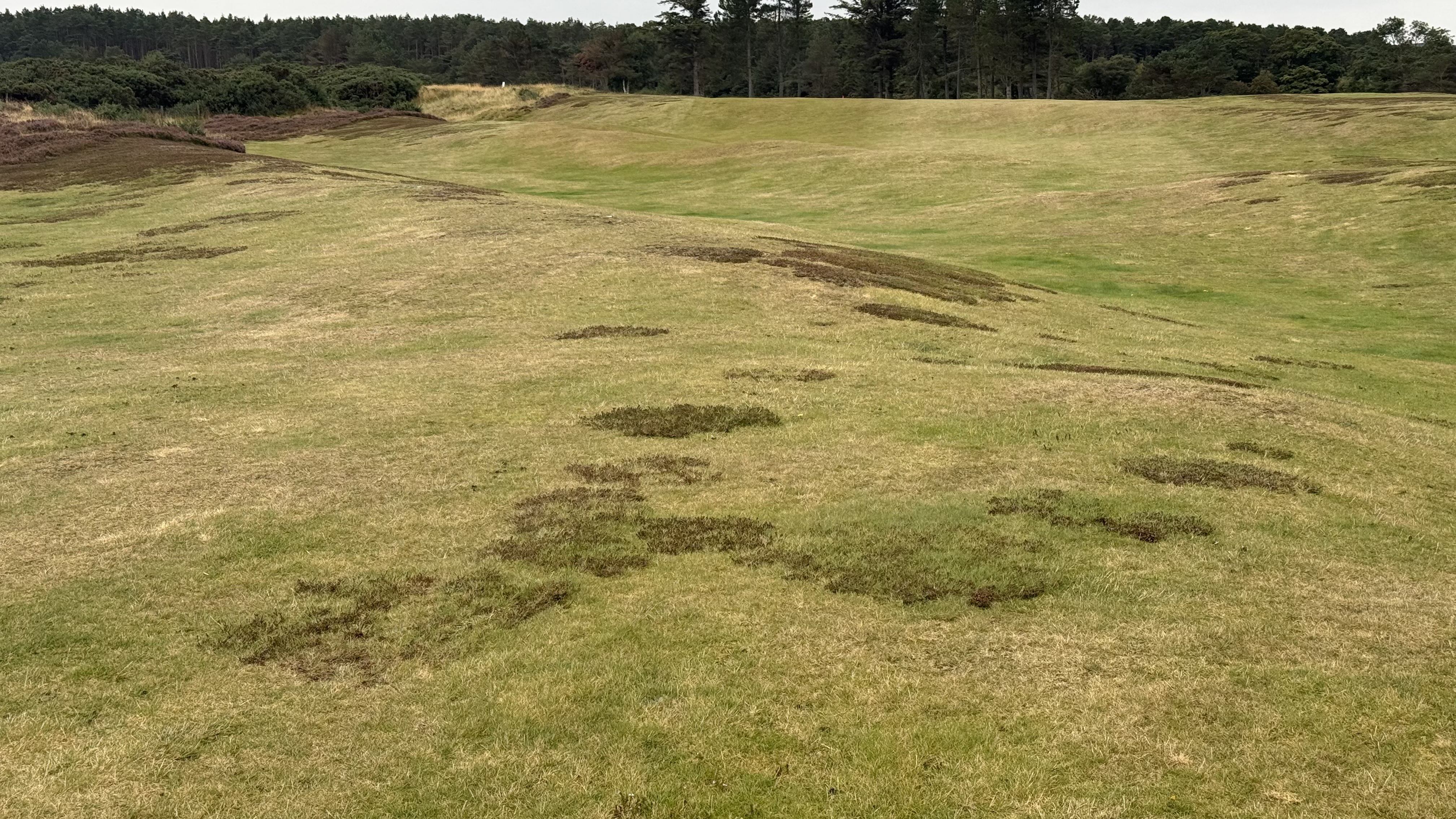
Scotch heather
Calluna vulgaris
A low, woody, evergreen dwarf shrub of acidic heathland and links courses that forms dense, wiry mats and struggles under close, frequent mowing, acting as a weed only where it encroaches into playing surfaces.
Identification
A low-growing, woody, evergreen perennial shrub — not a true grass or broadleaf herb — with tiny, scale-like, overlapping leaves densely covering wiry, much-branched stems. Small, urn- to bell-shaped flowers (typically pink-purple, occasionally white) are borne in one-sided spikes at branch tips from late summer into fall. Mature plants form tough, woody mounds or mats, and lower stems often root where they touch the soil (layering), letting colonies creep outward. Its wiry woody stems and needle-like leaves readily distinguish it from any grass or broadleaf turf weed.
Symptoms & Damage
Tough, wiry, evergreen mats or hummocks of fine, needle-like foliage appear at the rough and fairway margins of heathland and links courses, encroaching into mown turf; because it is woody rather than a true grass, it tends to thin, brown, or die out under sustained close, frequent mowing rather than blending into the turf canopy, leaving uneven, hard-to-recover patches that interfere with play and ball retrieval.
Biology
A long-lived, woody, evergreen dwarf shrub (family Ericaceae) that spreads both by seed (large numbers of tiny, wind-dispersed seeds) and vegetatively, since low branches root readily where they contact soil (layering), letting established plants expand outward as a mat over time. Growth is slow compared with turfgrass, and stands can persist for many years once established on suitable acidic sites.
Occurrence & Spread
Naturally dominant on nutrient-poor, acidic heathland and links soils, where it is often deliberately preserved as a defining feature of course character and wildlife habitat. It becomes a management issue only where it spreads from native rough into intensively mown playing surfaces, since sustained low, frequent mowing stresses and can eventually kill the woody stems while opening gaps that erode playability.
Favorable Conditions
Acidic, infertile, well-drained sandy or peaty soils; open, sunny sites typical of heathland, moorland, and links/coastal golf courses in cool, maritime climates (e.g., Scotland, the UK, Pacific Northwest); intolerant of shade and of fertile, frequently disturbed soil.
Cultural Management
Where heather is a valued course feature, maintain a clear mown buffer and periodically cut back or scarify heather stands to rejuvenate them and prevent overgrowth into play areas. Where it has already encroached onto turf maintained at fairway or green height, repeated close mowing over time will thin and stress it, though removing the woody crowns and roots may be needed to fully reclaim the area. Avoid fertilizing or liming encroachment zones, since higher fertility and pH favor turfgrass competition over heather.
Further Reading
University extension resources — open in a new tab.
Related Reports
No published reports yet for this pest.
Reports will appear here as they are peer-reviewed and published.