
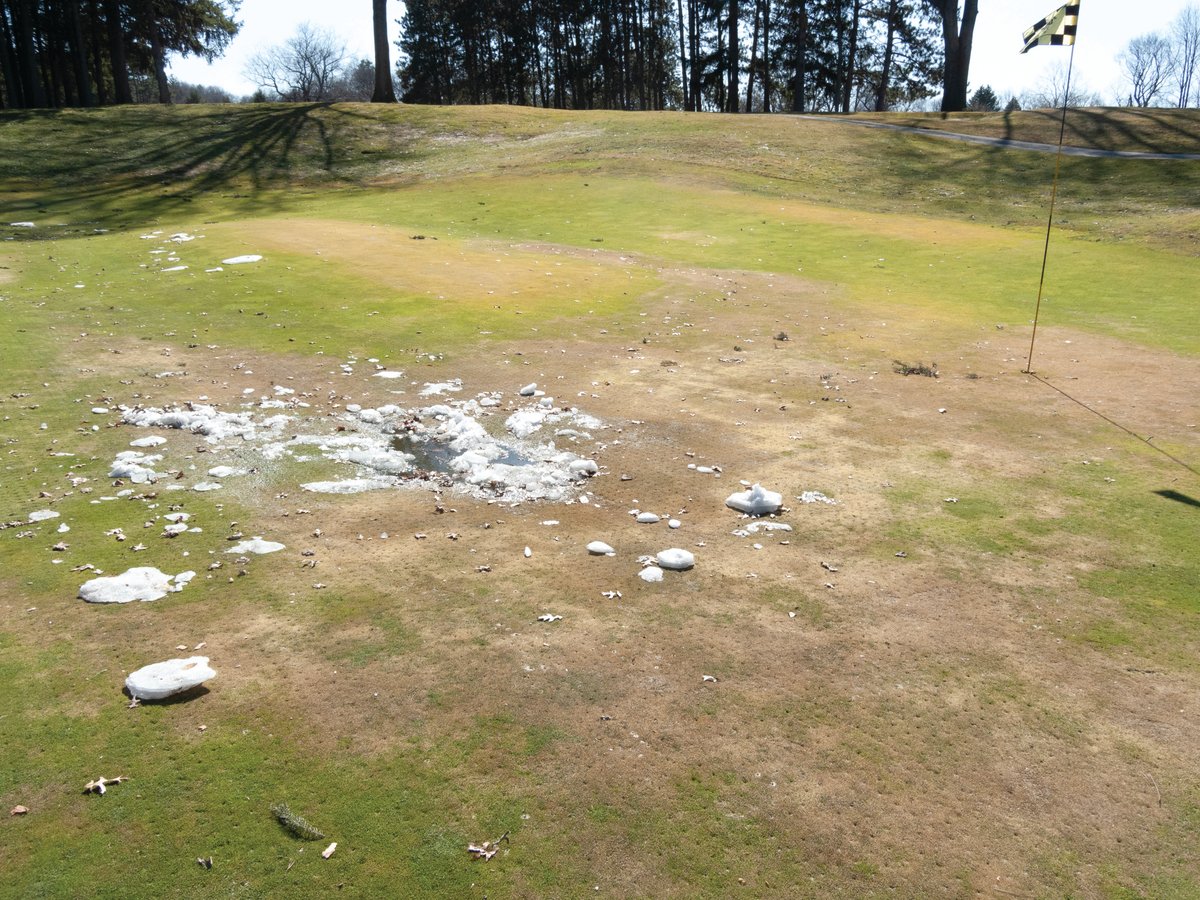
Winterkill
Abiotic stress
Winter damage from multiple mechanisms: desiccation, direct low-temperature kill, anoxia, and crown hydration injury.
Identification
Irregular patches of dead or dormant turf appearing after winter, ranging from small spots to large areas. Symptoms vary by cause: desiccation shows bleached, dry leaves; direct kill shows blackened crowns; anoxia presents as waterlogged patches with a foul odor; crown hydration damage shows ice-encased or water-soaked crowns.
Symptoms
Desiccation: Leaf tissue dies from moisture loss when cold, dry winds and frozen soil prevent water uptake, leaving bleached, straw-colored foliage.
Direct low-temperature kill: Acute freezing temperatures kill plant tissue, resulting in blackened crowns and stems; severity depends on temperature extremes, snow cover, and prior hardening.
Anoxia: Winter flooding or ice layers trap water over the crown, depleting oxygen and causing root death and a characteristic foul, sulfurous odor; patches often have a water-soaked appearance.
Crown hydration: Repeated freeze-thaw cycles cause water uptake and ice formation within plant cells, rupturing tissue and killing the crown; common after mild winters interrupted by hard freezes.
Biology
Winterkill is not a pathogenic disease but rather abiotic injury from environmental stress. Cool-season grasses enter dormancy in fall, hardening their tissues and lowering water content to survive freezing. Warm-season grasses are naturally intolerant of freezing. Multiple stressors—desiccation, extreme cold, waterlogging, and freeze-thaw cycles—can overcome a plant's cold tolerance and kill crown tissue. Recovery depends on whether the crown survives; if crowns die, no spring green-up occurs.
Epidemiology
Winterkill risk is highest on poorly drained sites, shallow-rooted turf stressed by summer heat or drought, newly seeded stands with shallow roots, and turf at high elevations or in exposed locations. Fall and early-spring care significantly impact winter survival: late-season high nitrogen fertilization delays dormancy and reduces cold hardiness; conversely, adequate potassium enhances freezing tolerance. Turf mowed too short before winter is more vulnerable to desiccation and direct kill.
Favorable Conditions
Desiccation: cold, dry winters with wind and frozen soil. Direct kill: extreme temperatures below dormancy tolerance. Anoxia: winter flooding, ice layers, or poor drainage. Crown hydration: fluctuating temperatures with freeze-thaw cycles, especially after mild periods.
Cultural Management
Maintain dense, healthy turf through proper fertility (balanced N-K ratio, avoid late-season N), appropriate mowing height, and relief of compaction to ensure robust root systems. Improve drainage to prevent ice and waterlogging. Avoid excessive fall leaf removal; a light thatch layer insulates the crown. Water in fall if soils are dry and winter precipitation is low, ensuring soil moisture entering dormancy. Overseed thin areas to establish vigorous plants. For warm-season turf in cold climates, consider cold-hardy cultivars or temporary winter covers if freezing is a recurring issue.
Further Reading
University extension resources — open in a new tab.
Related Reports
No published reports yet for this pest.
Reports will appear here as they are peer-reviewed and published.