
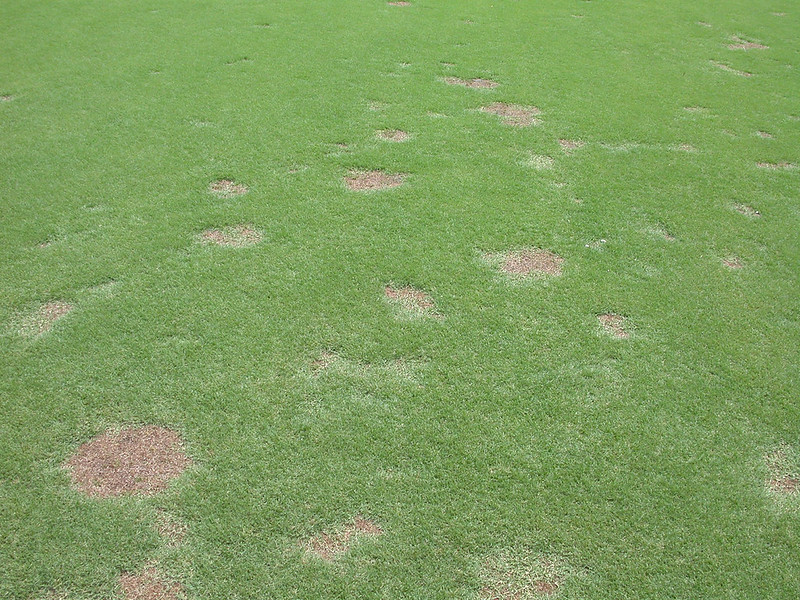
Spring dead spot
Ophiosphaerella korrae (East coast), Ophiosphaerella herpotricha (mid-west), Ophiosphaerella narmari (Australia/mid west)
The most damaging disease of bermudagrass, leaving circular dead patches that emerge from dormancy.
Identification
Circular bleached, sunken dead patches 8 cm to over 1 m visible as bermudagrass greens up in spring; dark rotted roots and stolons within patches.
Symptoms
Symptoms of spring dead spot appear at spring green-up and include 1-2 foot patches of brown or dead turf.
Signs
The fungus can be identified by washing roots and looking for hyphae (thread-like structures) and simple hyphopodia (small, knob-like structures) on the roots.
Biology
The pathogens that cause spring dead spot are soil-borne fungi that infect the roots and crowns of bermudagrass. They survive in the soil as chlamydospores, which are thick-walled, dormant structures that can persist for long periods of time.
Epidemiology
Spring dead spot typically occurs in the fall and spring, during periods of cool weather. Dormancy is required for the disease to develop, and hard winters can lead to increased severity of symptoms. The disease is most severe in the first 2-3 years after establishment of a bermudagrass turf, but symptoms typically decline after that.
Favorable Conditions
Cool fall soil temperatures favor infection; injury worst after cold winters on highly managed bermudagrass.
Cultural Management
Cultural control measures for spring dead spot include applying nitrogen for recovery, increasing height of cut, controlling weeds, and managing N source.
Further Reading
University extension resources — open in a new tab.
Related Reports
No published reports yet for this pest.
Reports will appear here as they are peer-reviewed and published.