Copper spot
Microdochium sorghi (formerly Gloeocercospora sorghi)
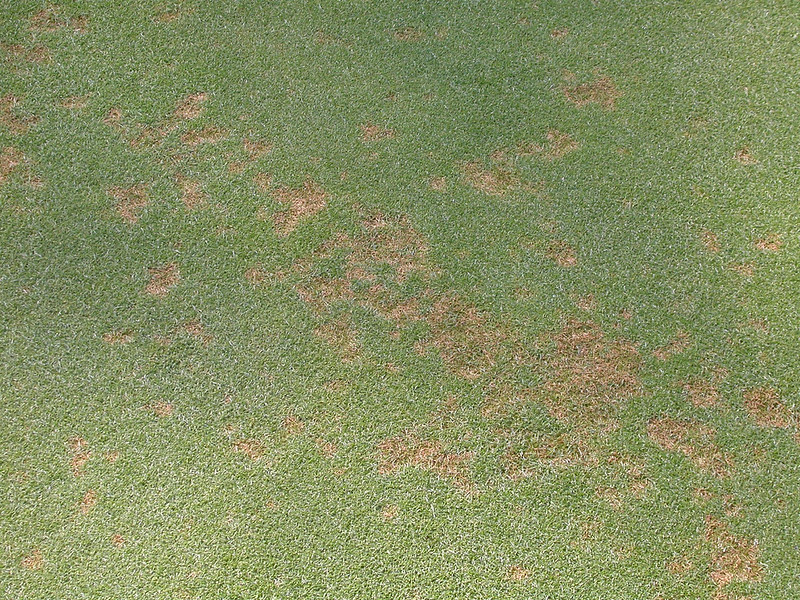
A warm-weather disease of bentgrass producing small copper-pink spots on acidic soils.
Identification
Small (2-5 cm) copper to salmon-pink spots that may coalesce; gelatinous spore masses form on leaves under humidity.
Symptoms
Copper spot presents as scattered patches, 3-8 cm across, with an orange to copper tone. Affected leaves within these patches show small, water-soaked lesions that range from red to brown, which can join together to cover entire leaves. Unlike the sharp boundaries seen in dollar spot, copper spot patches have blurred margins. During wet conditions, the disease can spread following mowing or rolling paths, similarly to Microdochium patch. Despite potential co-occurrence with dollar spot, differences in lesion color and patch edges can distinguish copper spot.
Signs
In warm and wet conditions, mycelium and sporodochia develop on the leaves. The sporodochia contain salmon-colored spores and take on a crown-shaped appearance when dry, turning orange to red. Small, black microsclerotia can be found embedded in infected leaves.
Biology
The fungus prefers hot and humid conditions, and the disease tends to thrive in the summer months. The fungi produce spores, which are spread by wind, rain, or human activity. These spores germinate and infect the leaf blades when the environmental conditions are favorable. The symptoms start as small, reddish-brown or coppery spots on the leaves that can coalesce into larger patches.
Epidemiology
Copper spot occurs during warm, wet weather with optimal air temperatures for infection ranging from 20-30°C (68-86°F). It is particularly damaging to turfgrass that has been fertilized with excessive nitrogen or is grown in highly acidic soil, especially in Agrostis canina. The pathogen, Microdochium sorghi, survives adverse weather conditions and overwinters as sclerotia or mycelia in thatch and infested leaves. When soil temperatures reach a sustained level above 17°C (62°F), the sclerotia germinate to form sporodochia, which produce conidia during warm and moist periods. Conidia can infect leaves through direct penetration or stomata, causing leaf necrosis and the formation of more sporodochia with conidia. Disease development can be rapid, especially when conditions are conducive to infection and prolonged leaf wetness occurs.
Favorable Conditions
Warm wet weather, acidic soils and low fertility.
Cultural Management
Copper spot management includes practices effective for dollar spot control. Removing morning dew through mowing, rolling, or dragging and enhancing air circulation by pruning trees or using fans can decrease leaf wetness. During active copper spot periods, limit water-soluble nitrogen applications to not exceed 0.25 lb per 1,000 ft² per application. Avoid mowing wet, infected turf and maintain soil pH between 6-7. Using lime may decrease disease severity in soils with pH below 5.5. Utilizing Agrostis canina cultivars with copper spot resistance can also be beneficial.
Further Reading
University extension resources — open in a new tab.
Related Reports
No published reports yet for this pest.
Reports will appear here as they are peer-reviewed and published.