
Turfgrass Disease Library
Reference profiles for common turfgrass diseases — pathogens, symptoms, biology, and cultural management strategies.
Reference only. Always consult current product labels before making fungicide applications. Contact your state extension service or a licensed pesticide applicator for site-specific guidance.
45 diseases
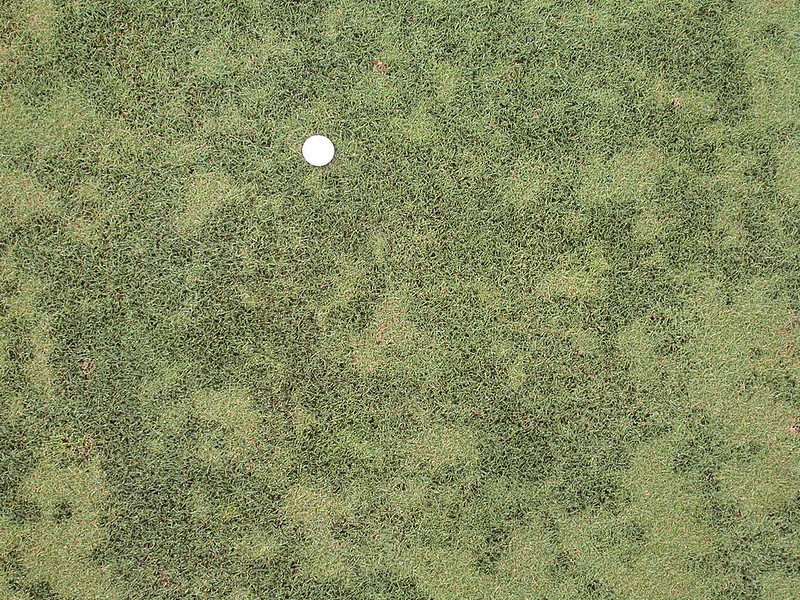
Algae
Oscillatoria spp./Phormidium spp.
Blue/green algae (cyanobacteria) form slimy black crusts and thinning patches on wet, thin putting-green turf.

Anthracnose
Colletotrichum cereale (formerly C. graminicola)
Anthracnose basal rot, caused by Colletotrichum cereale, shows as orange-to-yellow individual plants in a non-descript pattern, with black setae on the leaves and black infection mats at the crown.
Ascochyta leaf blight
Ascochyta spp.
A cosmetic but alarming blight that straw-colors large areas of Kentucky bluegrass almost overnight, usually after swings between wet and hot/dry weather.
Bacterial decline
Acidovorax avenae
A relatively new bacterial disease of creeping bentgrass putting greens (first reported 2009), usually superficial but occasionally damaging.
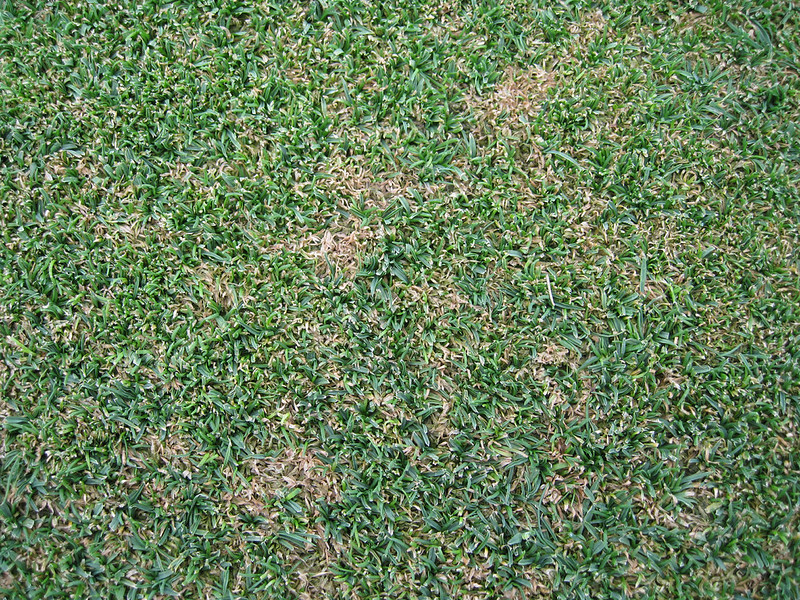
Bacterial wilt
Xanthomonas translucens
A bacterial disease of close-cut annual bluegrass and certain bentgrass cultivars causing rapid wilt and decline.
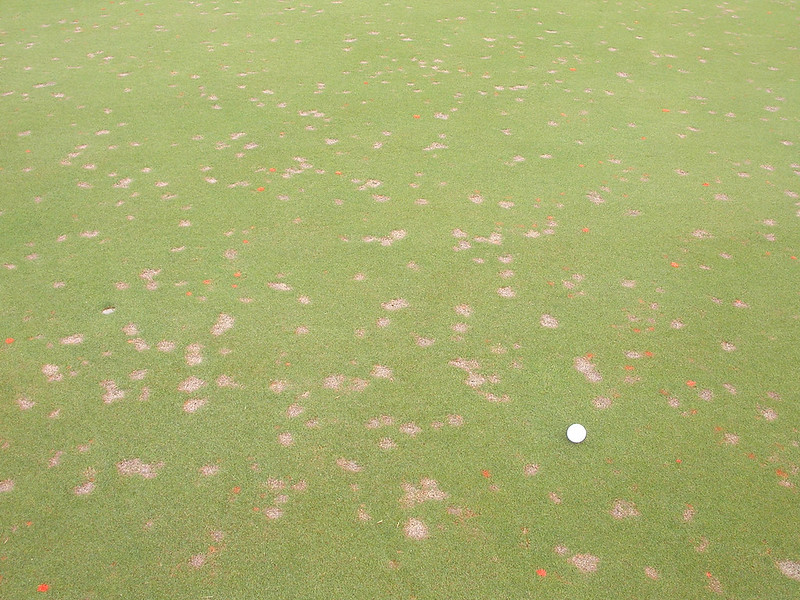
Bentgrass dead spot
Ophiosphaerella agrostidis
A patch disease primarily of young creeping bentgrass greens, producing small reddish, sunken spots.
Black layer
Not a pathogen, it is a physical condition caused by anaerobic conditions.

Brown patch
Rhizoctonia solani
A hot-weather foliar disease producing roughly circular brown patches, often with a smoke ring.
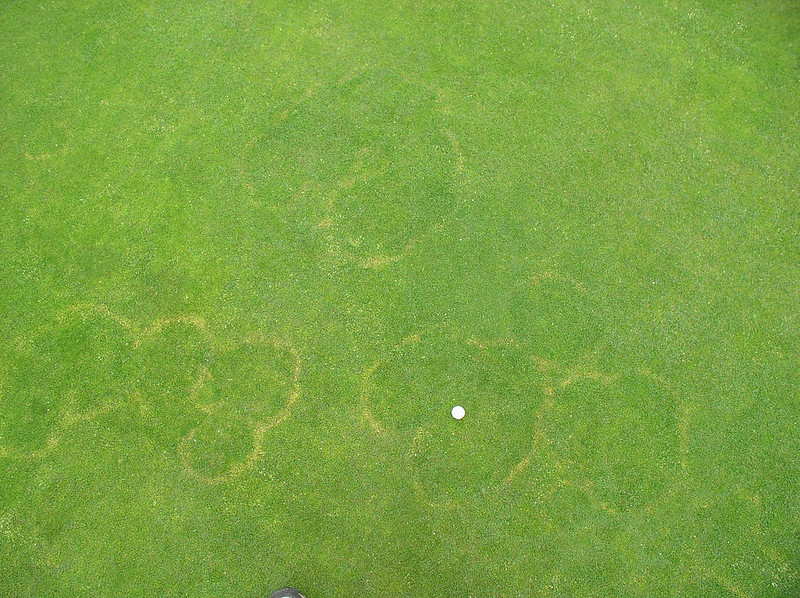
Brown ring patch (Waitea patch)
Waitea circinata (formerly Rhizoctonia circinata)
A Rhizoctonia-like disease of annual bluegrass greens producing yellow-to-bronze rings.
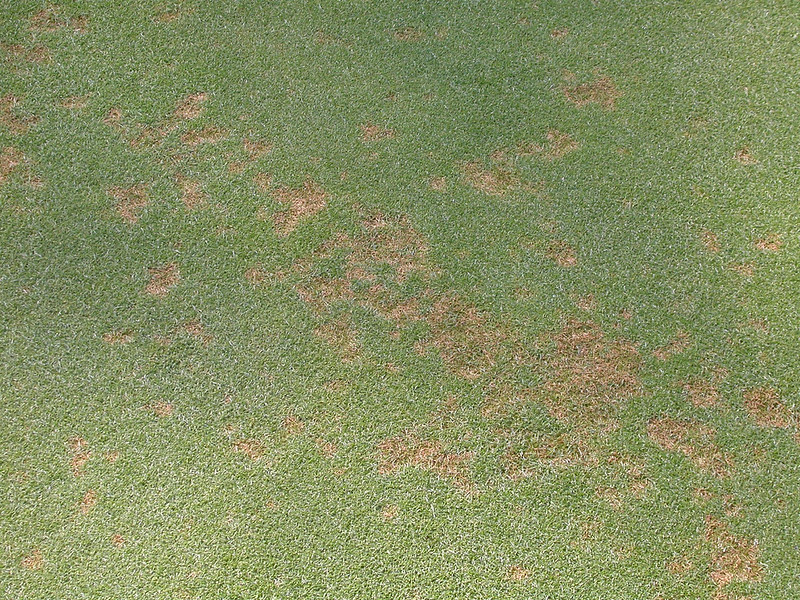
Copper spot
Microdochium sorghi (formerly Gloeocercospora sorghi)
A warm-weather disease of bentgrass producing small copper-pink spots on acidic soils.
Curvularia blight (fading-out)
Curvularia spp.
A heat- and stress-driven root/crown rot and leaf blight that fades turf into mottled green, then irregular reddish-brown dead patches.
Damping-off & seedling blight
Pythium, Fusarium, Drechslera/Bipolaris, Rhizoctonia spp.
A complex of seedling diseases that rot seed before emergence or collapse young seedlings after emergence, thinning new stands.

Dollar spot
Clarireedia spp.
The most economically important disease of golf turf, producing small silver-dollar-sized sunken spots.

Fairy ring
Various species (60+ species responsible)
Soil-inhabiting fungi forming rings or arcs of stimulated, dead, or mushroom-bearing turf.
Gray leaf spot
Pyricularia oryzae (formerly known as Pyricularia grisea)
An aggressive foliar blight of perennial ryegrass and St. Augustinegrass that can collapse stands rapidly.

Large patch
Rhizoctonia solani
A patch disease of warm-season turf active when grass enters or exits dormancy.
Leaf and sheath spot
Waitea circinata var. zeae (syn. Rhizoctonia zeae)
A soilborne Rhizoctonia disease of ultradwarf bermudagrass greens causing diffuse leaf and sheath necrosis. Caused by the same pathogen as mini ring -- the two names describe different symptom expressions of one disease.
Leaf smuts (stripe & flag smut)
Ustilago striiformis & Urocystis agropyri
Systemic smut fungi that stunt and streak older stands of Kentucky bluegrass, splitting leaves into ribbons that release black spore dust.
Leaf spot / melting out
Drechslera and Bipolaris spp.
A Helminthosporium complex causing leaf lesions then crown/root rot (melting out) and stand thinning.
Leptosphaerulina leaf blight
Leptosphaerulina australis
A typically minor leaf blight that affects stressed or senescing turf, often following other stresses.

Microdochium patch
Monographella nivalis (formerly Microdochium nivale)
A cool-wet-weather patch disease (also called pink snow mold) that, unlike gray snow mold, does not require snow cover.
Mini ring
Waitea circinata var. zeae (syn. Rhizoctonia zeae)
A soilborne Rhizoctonia disease of ultradwarf bermudagrass greens producing bronze rings or patches. Caused by the same pathogen as leaf and sheath spot -- the two names describe different symptom expressions of one disease.
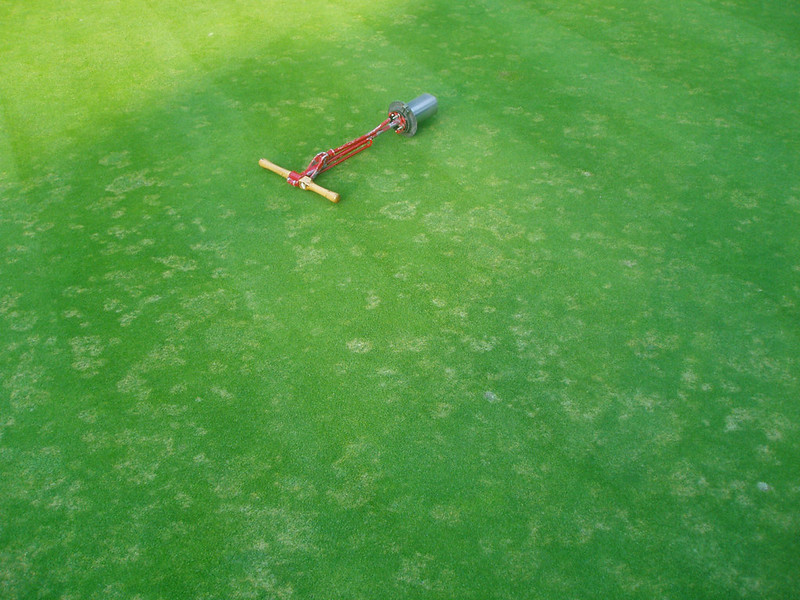
Necrotic ring spot
Ophiosphaerella korrae
A root-rotting patch disease of Kentucky bluegrass producing frog-eye rings.
Pink patch
Limonomyces roseipellis
A low-fertility foliar disease, once grouped with red thread, that forms a pink film on leaves but lacks red thread’s leaf-tip threads.
Powdery mildew
Erysiphe graminis
A white powdery foliar fungus most common on Kentucky bluegrass in shade.

Pythium blight
Pythium aphanidermatum (other species)
An aggressive, fast-spreading disease that can destroy stands of turf within hours under hot, wet conditions.

Pythium root dysfunction
Pythium volutum
A root-infecting Pythium disease of bentgrass greens that limits rooting and shows as summer decline.
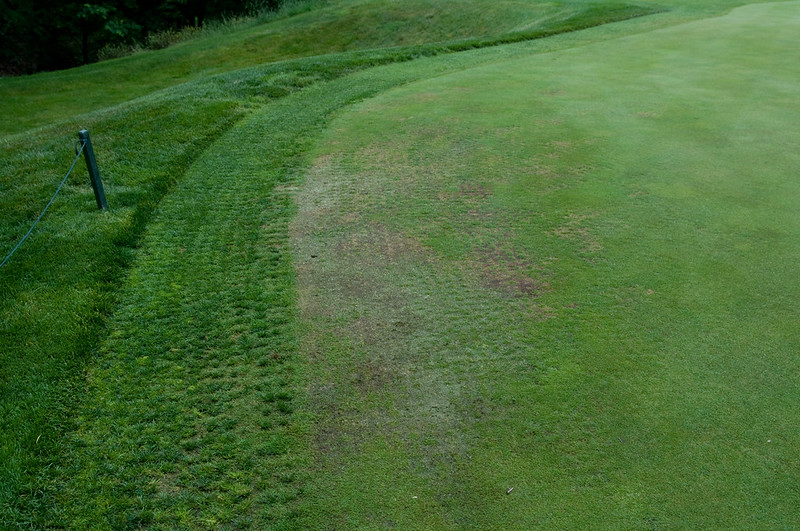
Pythium root rot
Pythium species.
A root rot of poorly drained putting greens, caused by several Pythium species, that thins turf in wet and high-traffic areas.
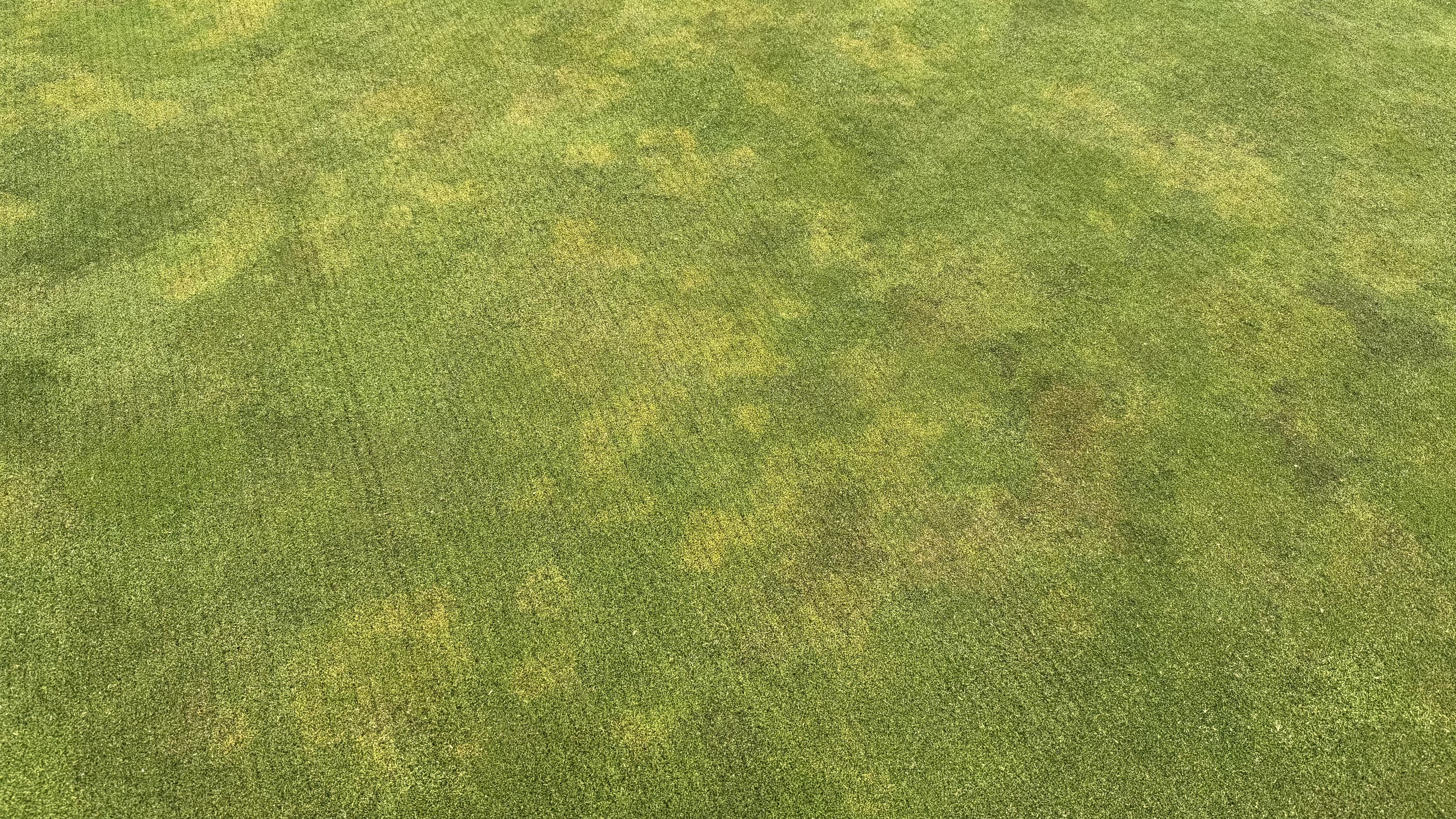
Rapid blight
Labyrinthula terrestris
A salinity-driven disease of cool-season turf — especially annual bluegrass and ryegrass — that rapidly collapses patches where irrigation water or soils are salty.
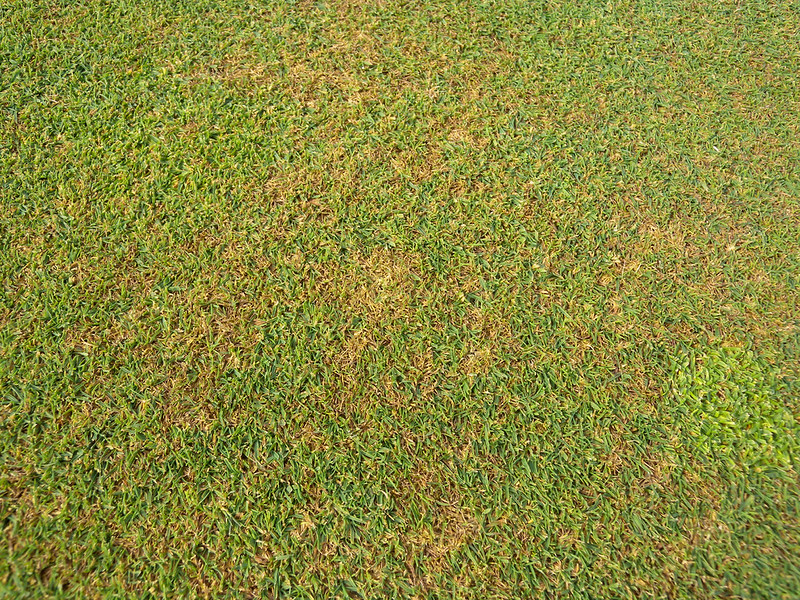
Red leaf spot
Drechslera erythrospila
A Helminthosporium-type leaf spot of bentgrass causing reddish lesions and thinning.
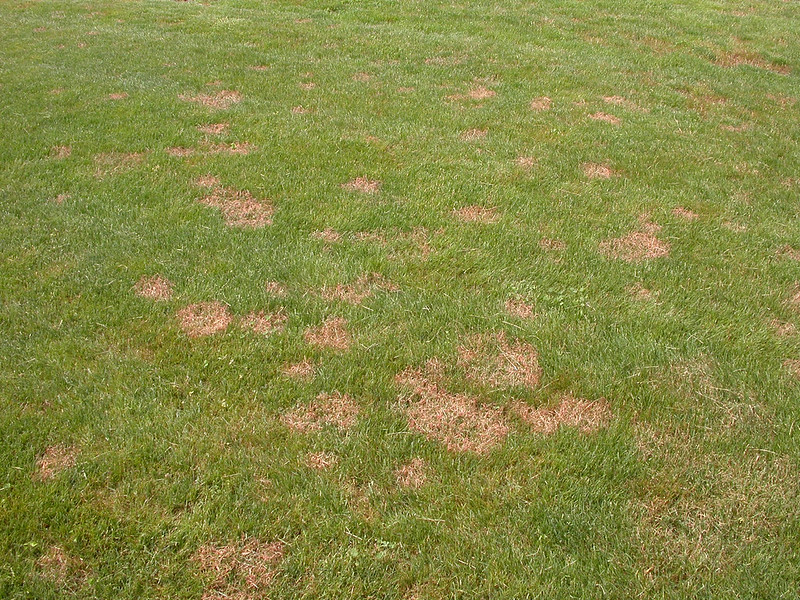
Red thread
Laetisaria fuciformis
A foliar disease of low-fertility turf producing pink-red threads (sclerotia) at leaf tips.
Rust
Puccinia spp.
Foliar rust fungi producing orange-yellow pustules that rub off as powder onto shoes and equipment.
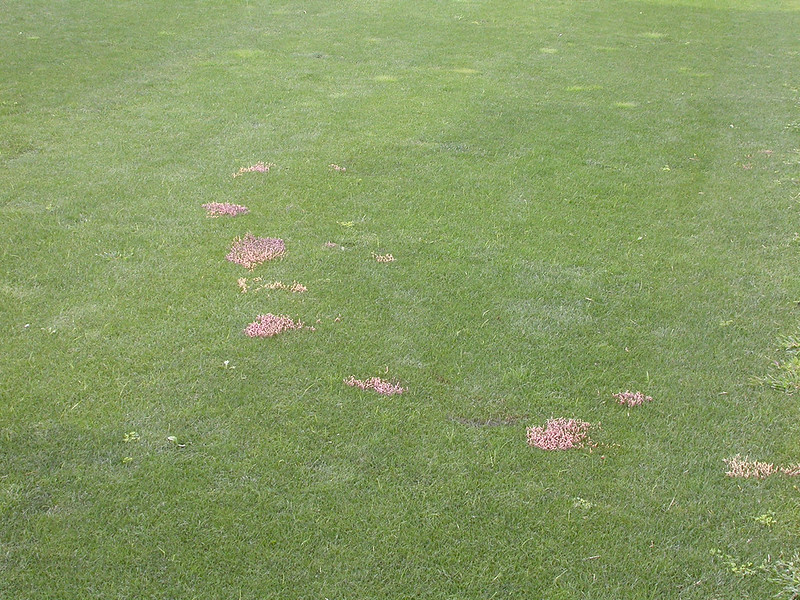
Slime mold
Myxomycetes
Saprophytic organisms that crawl onto turf and produce crusty spore masses; harmless to grass.
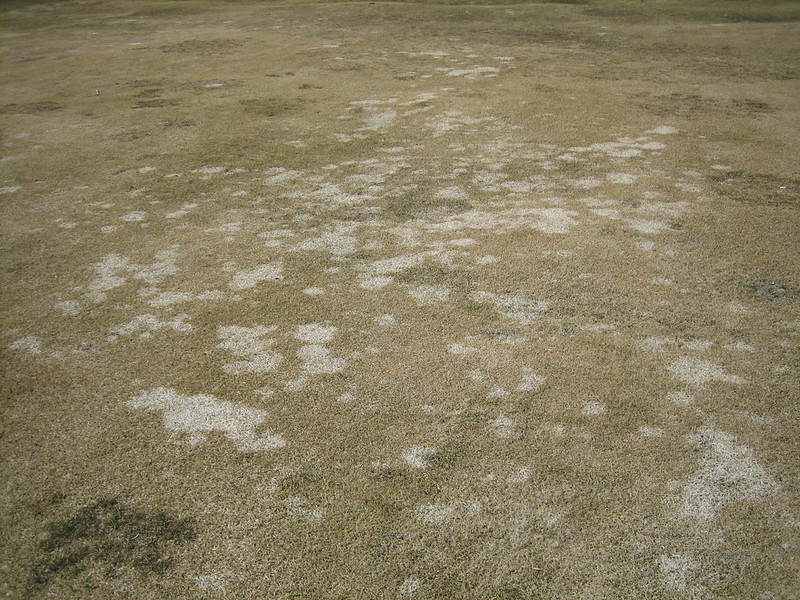
Snow mold (gray & pink)
Typhula incarnata & Typhula ishikariensis
Cold-weather diseases that develop under snow cover or in cold, wet conditions.
Southern blight
Athelia rolfsii (anamorph Sclerotium rolfsii)
A hot-weather blight that kills turf in expanding rings or crescents, recognized by white mycelium and mustard-seed-like tan sclerotia at the plant base.
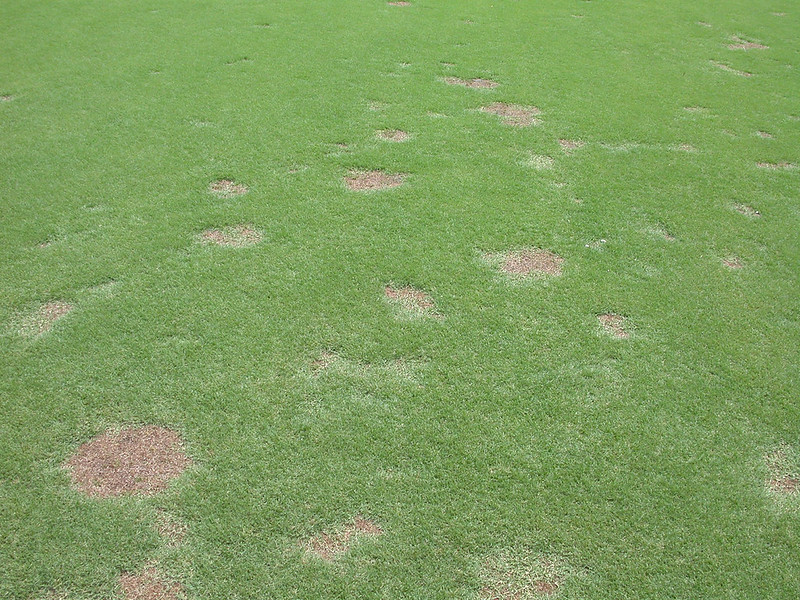
Spring dead spot
Ophiosphaerella korrae (East coast), Ophiosphaerella herpotricha (mid-west), Ophiosphaerella narmari (Australia/mid west)
The most damaging disease of bermudagrass, leaving circular dead patches that emerge from dormancy.
St. Augustine decline
Panicum Mosaic Virus

Summer patch
Magnaporthiopsis poae
A root-infecting disease producing frog-eye patches during hot weather, though infection begins earlier.
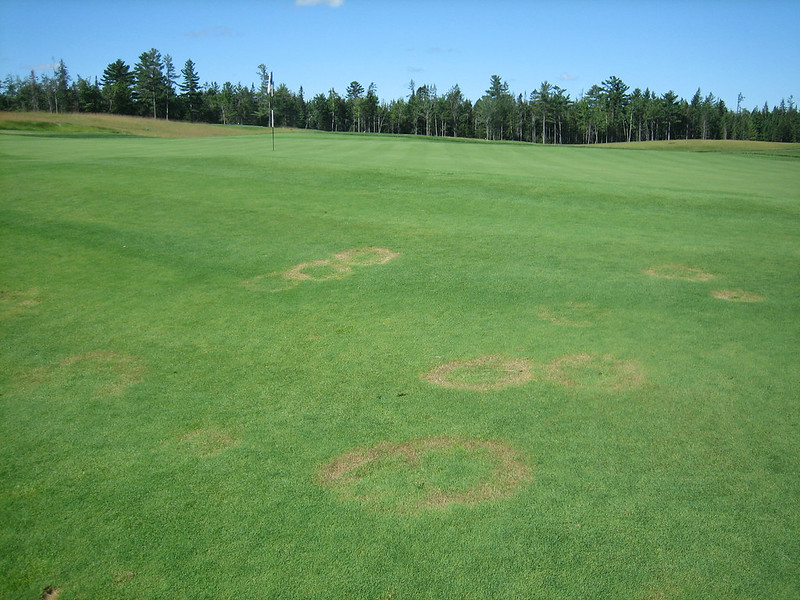
Take-all patch
Gaeumannomyces avenae
A root and crown disease of bentgrass producing reddish-bronze sunken rings, especially on sandy, high-pH sites.
Take-all root rot
Gaeumannomyces graminis var. graminis
A warm-season root-rotting disease that thins turf into yellow, irregular patches — common on stressed St. Augustinegrass and bermudagrass.
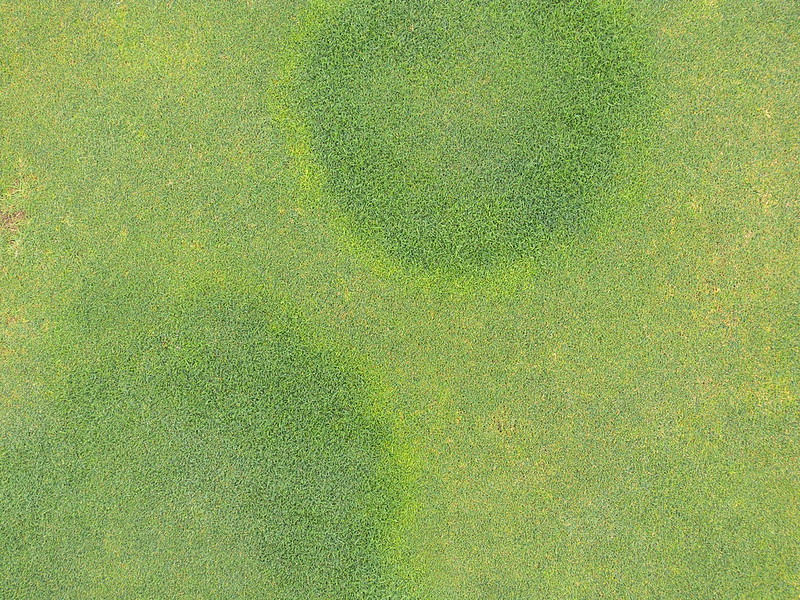
Thatch collapse (Sphaerobolus)
Sphaerobolus stellatus
A thatch-degrading fungus (artillery/cannon fungus) associated with localized thatch collapse and depressions.
White blight
Melanotus phillipsii
A warm-weather blight primarily of fescues, producing white patches with pink-salmon borders.
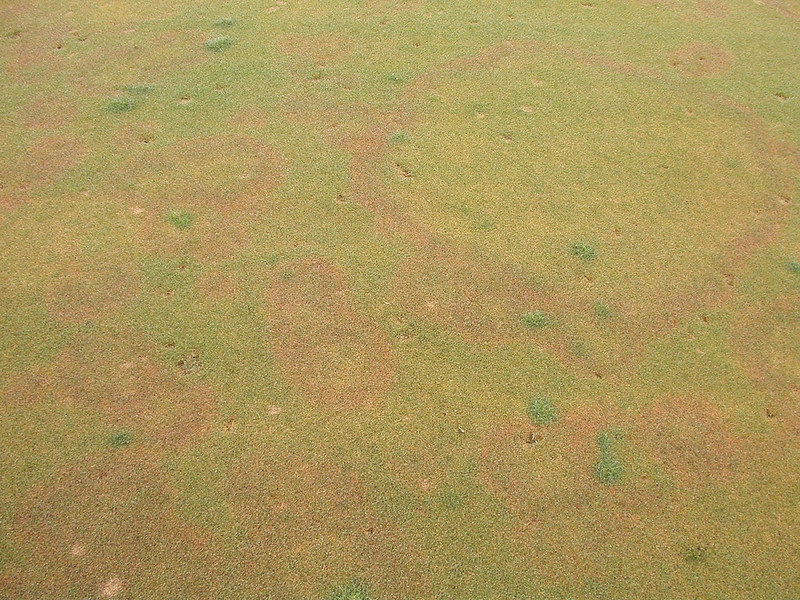
Yellow patch (cool-season brown patch)
Rhizoctonia cerealis
A cool-weather Rhizoctonia disease producing yellow rings and patches, usually cosmetic.
Yellow ring
Trechispora alnicola
An uncommon, mostly cosmetic disease of Kentucky bluegrass caused by a fairy-ring relative, appearing as yellow rings.
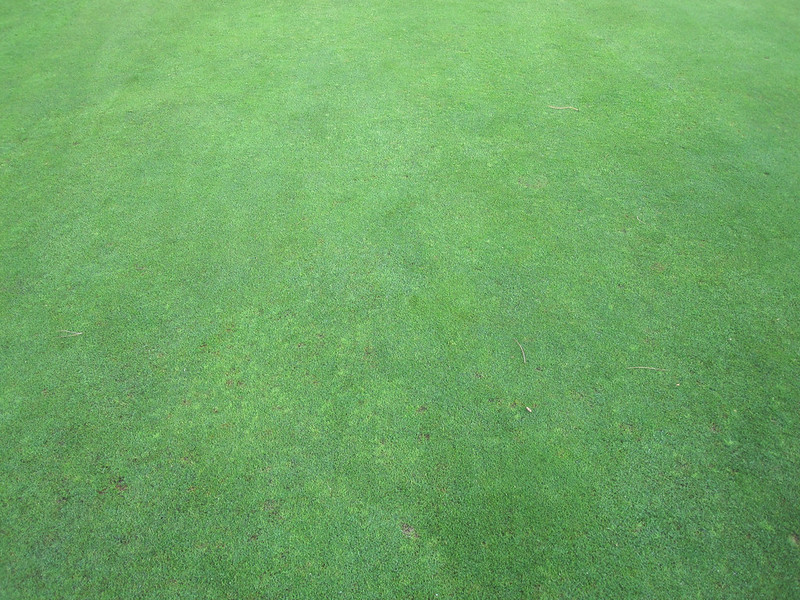
Yellow tuft (downy mildew)
Sclerophthora macrospora
A downy mildew producing small yellow tufts of densely clustered shoots; mostly cosmetic.