
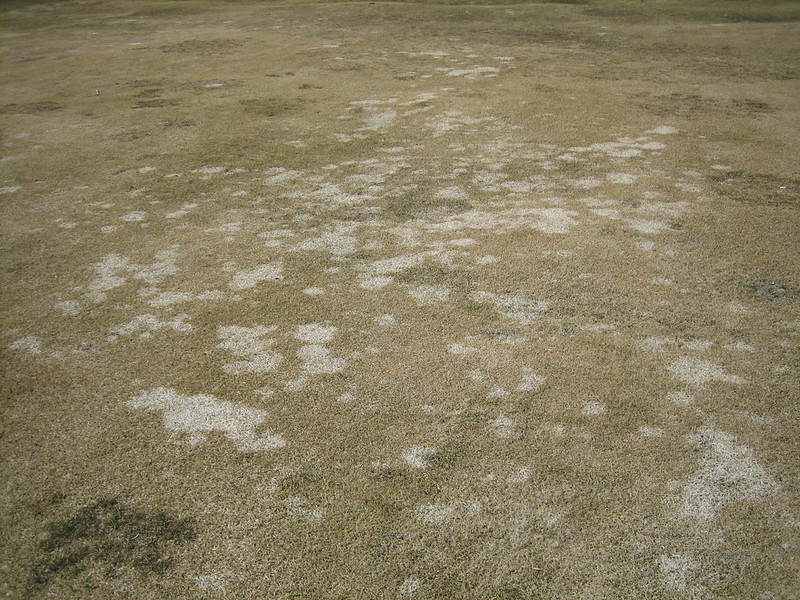
Snow mold (gray & pink)
Typhula incarnata & Typhula ishikariensis
Cold-weather diseases that develop under snow cover or in cold, wet conditions.
Identification
Circular bleached patches at snowmelt. Gray snow mold shows gray mycelium and tiny dark sclerotia; pink snow mold has pinkish margins and can occur without snow.
Symptoms
Gray snow mold symptoms typically appear as circular patches in turfgrass, ranging from a few inches to a foot in diameter, following the melting of snow in the spring. These patches can range in color from light yellow to red, straw-colored, or grayish brown, and may sometimes coalesce to create a widespread area of blighted turf. The affected grass may appear matted or thin and may be easily pulled up from the soil. The center of the patches may appear sunken or depressed. In severe cases, the patches may merge to form large, irregularly shaped areas of dead or dying grass. Overall, gray snow mold symptoms can lead to a decline in the appearance and quality of the turfgrass.
Signs
The signs of a Typhula species infection include the presence of sclerotia, which are hard, compact fungal structures that help the fungus survive in harsh conditions. The sclerotia of T. incarnata are large and salmon to pink in color, while T. ishikariensis has small black bead-like sclerotia. Additionally, the mycelium, or the vegetative part of the fungus, can also be seen on infected turfgrass. These signs can be observed in the spring after snow melt and can help distinguish gray snow mold caused by the Typhula species from other types of snow mold.
Biology
The life cycle of Typhula species begins with the formation of fungal spores, which are produced on the surface of infected turfgrass leaves. These spores are dispersed by wind and water and can infect new areas of turfgrass when conditions are favorable for growth. Once the spores land on a suitable host, they germinate and produce hyphae, which are the vegetative growth of the fungus. The hyphae grow through the leaf tissue, penetrating the cells and causing damage. The infected cells die, leading to the formation of characteristic circular patches of blighted turf. As the fungus grows, it produces sclerotia, which are small, hard structures that help the fungus survive in the soil during unfavorable conditions. The sclerotia can survive in the soil for several years and can germinate to produce new fungal growth when conditions become favorable again.
Epidemiology
To cause disease, Typhula species require specific environmental conditions. T. incarnata requires 60 days of snow cover and T. ishikariensis requires 75-90 days of snow cover. These fungi grow best in cool and moist conditions and can cause severe damage to turfgrass during prolonged periods of snow cover.
Favorable Conditions
Prolonged snow cover on unfrozen ground (gray), or cold wet weather near freezing (pink).
Cultural Management
Cultural control options for gray snow mold caused by Typhula species include mowing late into the season to reduce the amount of residue on the turf, applying spring nitrogen to promote healthy growth, and using barriers such as snow fences or windbreak plantings in turf areas to prevent snow accumulation. Additionally, facilitating drainage by removing snow and cutting channels can help to prevent the development of the disease.
Further Reading
University extension resources — open in a new tab.
Related Reports
No published reports yet for this pest.
Reports will appear here as they are peer-reviewed and published.