
Red thread
Laetisaria fuciformis
A foliar disease of low-fertility turf producing pink-red threads (sclerotia) at leaf tips.
Identification
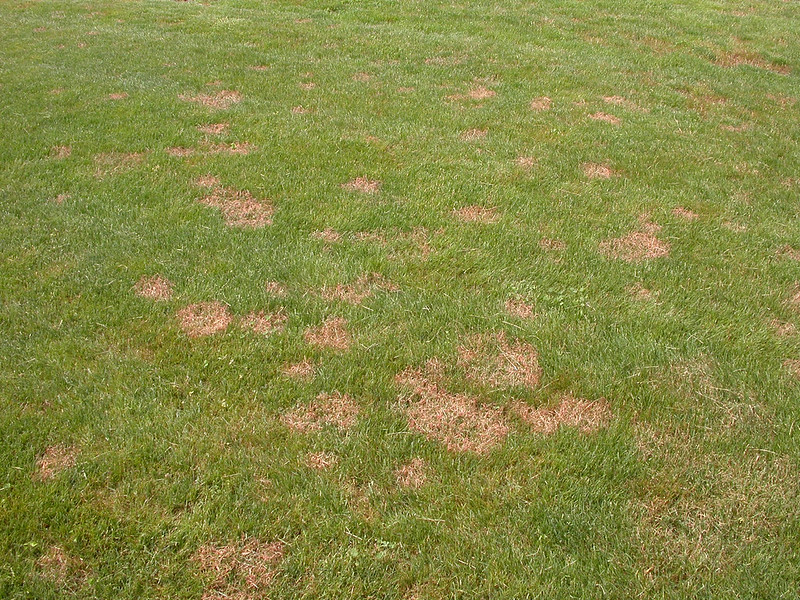
Irregular tan to pinkish patches up to 0.5 m. Look for red-pink antler-like threads of fungal stroma extending from leaf tips, visible when wet.
Symptoms
Symptoms of red thread include distinct circular or irregularly shaped patches, ranging in size from a few inches to more than a foot in diameter, of water-soaked grass. The leaves in these patches turn straw brown to tan in color as they die. In high cut turf, the patches may be as large as 1 foot and are easily visible. In low cut turf, the symptoms may resemble those of dollar spot, with small, circular patches of discolored grass.
Signs
Signs include small, thread-like, pink to red colored fungal sclerotia growing from the affected leaves. These signs are often more pronounced on the leaf tips and margins, and can give the affected leaves a red or pinkish tinge.
Biology
The pathogen that causes red thread in turf infects plants and then produces thread-like structures called sclerotia. These sclerotia develop within the infected turf, and can be visible as small, red thread-like structures. As the disease progresses, the sclerotia turn brittle and fall back into the soil, where they can survive adverse conditions such as drought or high temperatures. In the following spring, the sclerotia can infect the turf again, leading to new outbreaks of the disease.
Epidemiology
The disease is most likely to occur in turf that is nitrogen deficient. The disease typically emerges during cool and overcast weather in the spring and autumn, but it can also occur anytime there is cool, overcast, and wet weather. The fungus infects the leaves and causes characteristic red thread-like sclerotia, which is how the disease got its name. It is important to note that red thread is not a serious disease and is more of a cosmetic problem.
Favorable Conditions
Cool (15-25 C) wet weather and low nitrogen fertility.
Cultural Management
Cultural control options for red thread include adequate nutrient management, utilizing water-soluble (quick release) sources of nitrogen, and applying nitrogen in the spring to prevent the disease or aid in its recovery.
Further Reading
University extension resources — open in a new tab.
Related Reports
No published reports yet for this pest.
Reports will appear here as they are peer-reviewed and published.