
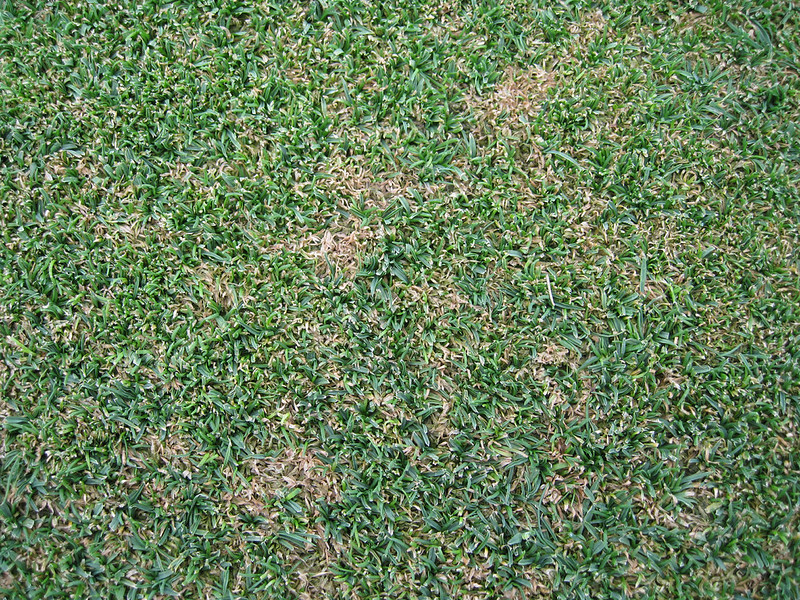
Bacterial wilt
Xanthomonas translucens
A bacterial disease of close-cut annual bluegrass and certain bentgrass cultivars causing rapid wilt and decline.
Identification
Diffuse chlorotic to bronze patches and general thinning; affected plants wilt and die quickly. A bacterial stream can be seen from cut stems under a microscope. Often confused with abiotic decline.
Symptoms
Symptoms of bacterial wilt caused by X. translucens include small, tan colored spots on the turfgrass which ultimately lead to the death of the affected areas. These symptoms are more severe on shorter-cut turfgrass and can appear as lime or light-green spots of elongated turfgrass plants.
Signs
Signs include the presence of streaming bacterial filaments, which can be seen under high power microscope examination. These filaments are a characteristic feature of the bacteria and are a definitive way to diagnose the presence of the pathogen.
Biology
Xanthomonas translucens is a gram-negative, aerobic, and motile bacteria that causes bacterial wilt in turf grasses. It is able to infect the leaf tissue of the host plant, colonizing the xylem vessels and causing blockage of water and nutrient flow. The bacteria can survive in the soil and can also be spread through water or contaminated equipment.
Epidemiology
The disease is most severe under warm and humid conditions, with symptoms appearing during the summer and early fall months. The pathogen is spread through water, soil, and equipment. The symptoms may appear slowly or rapidly, depending on the weather conditions, and can be severe in closely mown turf. High humidity and frequent rainfall can also contribute to the spread of the disease. As the disease spreads, the infected areas will become larger and more severe.
Favorable Conditions
Heat and mechanical stress on susceptible Poa annua and a few bentgrass cultivars; spread by mowing.
Cultural Management
Cultural control options for bacterial wilt include avoiding mowing when dew is present, dedicating a lightweight walk-mower to affected greens, avoiding topdressing or any practices that can injury turf, and disinfesting reels with bleach between greens. These practices aim to prevent the spread of the bacteria and reduce the potential for injury to the turf.
Further Reading
University extension resources — open in a new tab.
Related Reports
No published reports yet for this pest.
Reports will appear here as they are peer-reviewed and published.