
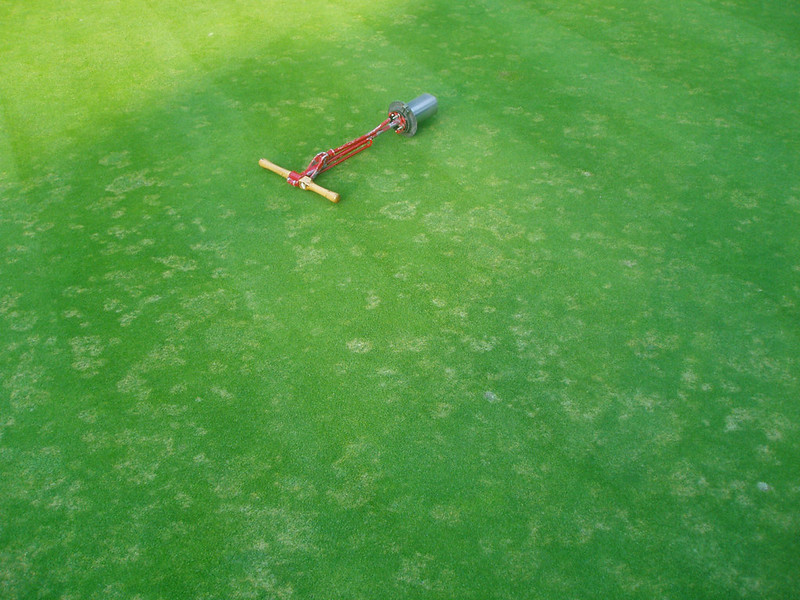
Necrotic ring spot
Ophiosphaerella korrae
A root-rotting patch disease of Kentucky bluegrass producing frog-eye rings.
Identification
Circular straw-colored patches and rings 8-60 cm, often with green centers (frog-eye). Roots and crowns are dark and rotted; recovery is slow.
Symptoms
The symptoms of necrotic ring spot (NRS) include circular patches of yellow or orange leaves. These patches usually start as small light green spots, 2-4 inches in diameter, but can enlarge to a foot or more. The affected turf may turn reddish-brown to bronze and then fade to a straw color before dying. The patches may also leave a sunken crater and blackened roots and rhizomes.
Signs
Signs of necrotic ring spot include the presence of runner hyphae and perithecia (rare to see in nature) which can be observed under a microscope.
Biology
The biology of O. korrae of cool season turfgrasses is not well understood, however it is believed to be a soil-borne fungus that infects the roots and crowns of cool season turfgrasses such as Kentucky bluegrass, annual bluegrass, and fine fescue. The fungus can survive in the soil for several years and can infect the turfgrass through wounds or natural openings in the plant. Once the fungus infects the plant, it causes necrosis (death) of the roots, crowns, and leaf tissue, resulting in circular patches of dead or dying grass. It is most active in cool, moist conditions, and can cause significant damage to turfgrass in these conditions.
Epidemiology
Necrotic ring spot (NRS) is a turfgrass disease that occurs during cool, wet weather in the spring and fall. It infects and colonizes roots and rhizomes and is most severe in compacted soils. The disease is most prevalent on younger lawns (2-4 years old) and occurs over a wide range of soil pH from 5-8. The severity of the disease declines after several years.
Favorable Conditions
Infection in cool, wet spring/fall; symptoms appear under summer stress on Kentucky bluegrass sod.
Cultural Management
Cultural control options for necrotic ring spot include alleviating compaction by diverting traffic, using organic fertilizers, improving soil drainage, and overseeding with less susceptible species. These methods aim to improve the overall health of the turf and reduce the susceptibility to infection by the pathogen. By reducing compaction, improving drainage and increasing the overall health of the turf, the pathogen will have a harder time infecting and colonizing the roots and rhizomes.
Further Reading
University extension resources — open in a new tab.
Related Reports
No published reports yet for this pest.
Reports will appear here as they are peer-reviewed and published.