
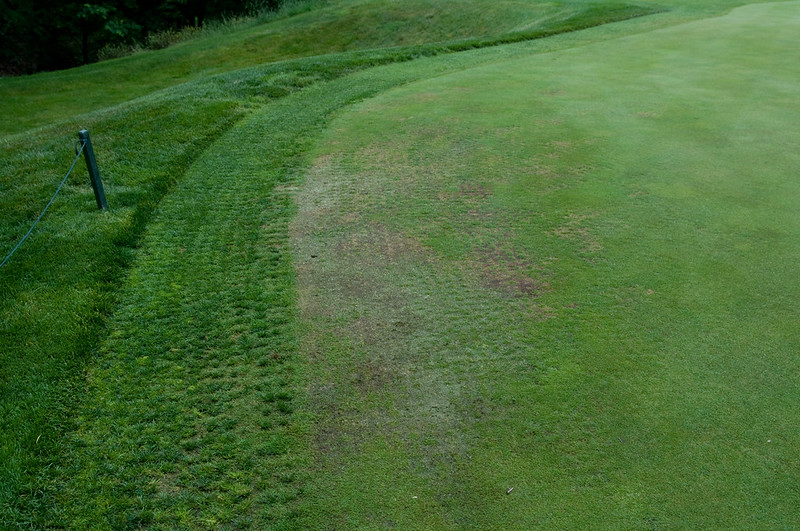
Pythium root rot
Pythium species.
A root rot of poorly drained putting greens, caused by several Pythium species, that thins turf in wet and high-traffic areas.
Identification
Thinning turf in poorly drained or high-traffic areas; microscopic exam of roots reveals abundant Pythium oospores. Distinct from foliar Pythium blight.
Symptoms
Symptoms of root rot caused by Pythium species include general thinning and wilting of the turfgrass. Oospores may clog up the roots and impede the uptake of water and nutrients.
Signs
Oospores and hyphae may be observed in the roots of infected plants. Foliar mycelia is not present.
Biology
Pythium species are a group of oomycete fungi that cause root rot in turfgrass. They produce oospores, which are thick-walled reproductive structures, that can survive in the soil for long periods of time. They are able to infect the roots of the turfgrass plants and cause damage, leading to wilting and thinning of the turf.
Epidemiology
Root rot caused by Pythium species is primarily a problem on putting greens, and is more prevalent in the spring and fall. It can also occur on the edges of greens or on new sand-based greens with native soils. High soil moisture and poor drainage can also contribute to the development of root rot caused by Pythium species.
Favorable Conditions
Poor drainage, saturated soils, and traffic stress; can occur throughout the year.
Cultural Management
Improving drainage and increasing air movement can help to reduce the incidence of root rot caused by Pythium species. Decreasing traffic and other stresses on the turfgrass can also be helpful.
Further Reading
University extension resources — open in a new tab.
Related Reports
No published reports yet for this pest.
Reports will appear here as they are peer-reviewed and published.