
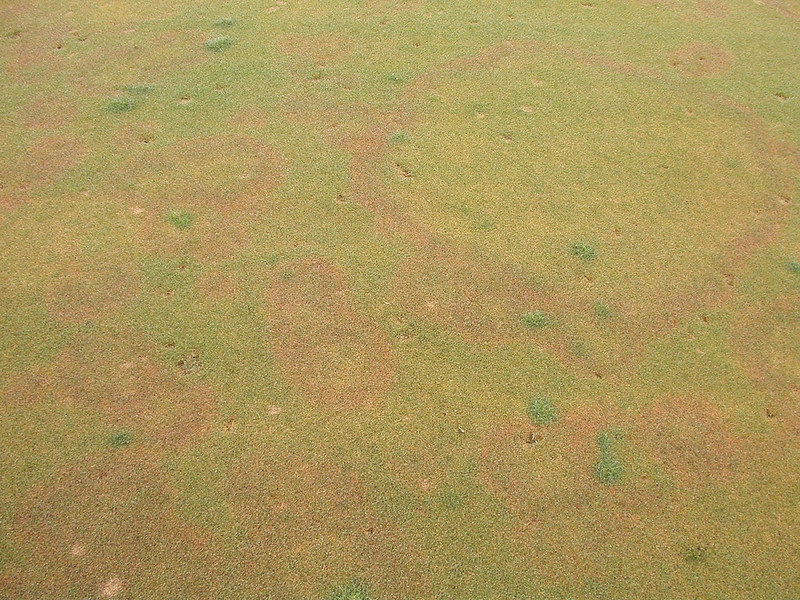
Yellow patch (cool-season brown patch)
Rhizoctonia cerealis
A cool-weather Rhizoctonia disease producing yellow rings and patches, usually cosmetic.
Identification
Yellow to bronze rings and patches 5-60 cm, sometimes with frog-eye centers. Rarely kills turf; mostly a discoloration on greens.
Symptoms
Yellow patch is characterized by patches of yellow or purple-bordered turf that may be a foot to several feet in diameter. The patches do not become sunken or depressed.
Signs
Under the microscope, cells of Rhizoctonia cerealis are binucleate and the typical mycelium (right angle branching and septate hyphae) of the fungus can be observed. No fluffy mycelium is visible in the field or post-incubation.
Biology
Yellow patch is caused by the fungus Rhizoctonia cerealis, which is commonly found in soil and can infect a wide range of turfgrass species.
Epidemiology
Yellow patch typically occurs in cool spring weather (50-65F) and may also occur in the fall. It is most commonly found on putting greens, but can also be found on fairways and tees.
Favorable Conditions
Cool (10-20 C), wet conditions and high humidity in late fall to early spring.
Cultural Management
There is no known cultural control for yellow patch.
Further Reading
University extension resources — open in a new tab.
Related Reports
No published reports yet for this pest.
Reports will appear here as they are peer-reviewed and published.