
Rapid blight
Labyrinthula terrestris
A salinity-driven disease of cool-season turf — especially annual bluegrass and ryegrass — that rapidly collapses patches where irrigation water or soils are salty.
Identification
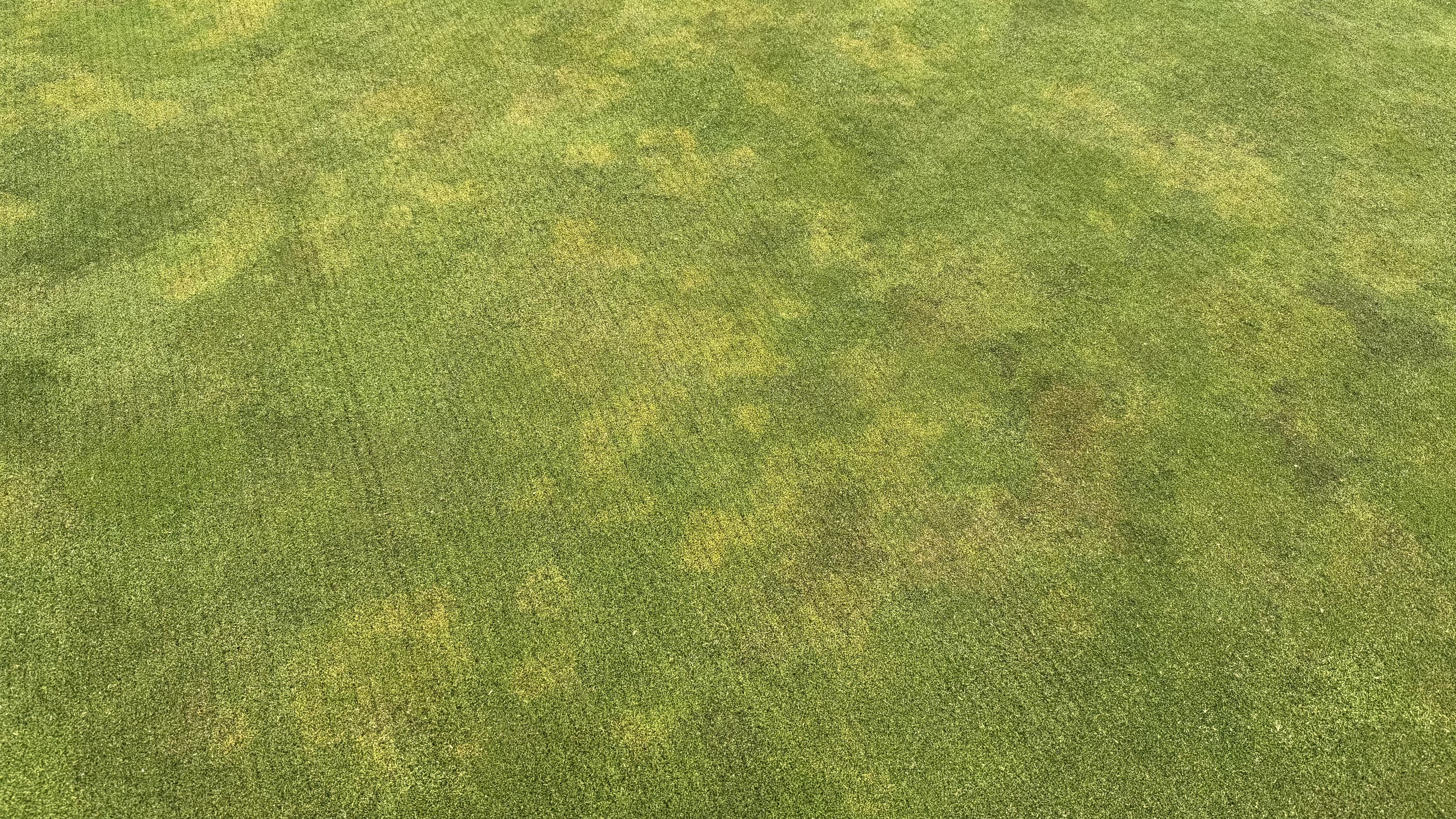
Irregular water-soaked, chlorotic patches that quickly turn dark, sunken, and necrotic. Affected leaves show dark rust-colored lesions; net-like Labyrinthula cells are visible microscopically.
Symptoms
Rapid blight causes circular to irregular patches of blighted turf that may have a pink or red color.
Signs
Irregular water-soaked, chlorotic patches that quickly turn dark, sunken, and necrotic. Affected leaves show dark rust-colored lesions; net-like Labyrinthula cells are visible microscopically.
Biology
Rapid blight is caused by Labyrinthula terrestris, a chromist that can infect turfgrass and is associated with saline environments.
Epidemiology
The disease is prevalent where irrigation water or soil conditions have elevated salinity, because high salt levels favor Labyrinthula terrestris.
Favorable Conditions
Elevated salinity in soil or irrigation water (often >2 dS/m) with cool, wet conditions and poor drainage. Most common where reclaimed/saline water is used.
Cultural Management
Manage salinity , leach salts and improve drainage; use lower-salinity water where possible. Avoid over-irrigation; flush salts from the root zone. Favor more salt-tolerant species/cultivars in chronic areas
Further Reading
University extension resources — open in a new tab.
Related Reports
No published reports yet for this pest.
Reports will appear here as they are peer-reviewed and published.