
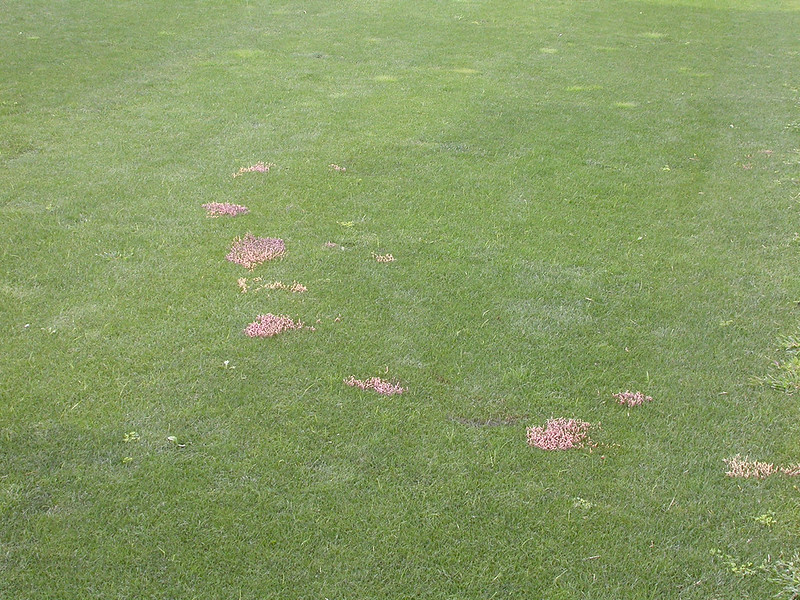
Slime mold
Myxomycetes
Saprophytic organisms that crawl onto turf and produce crusty spore masses; harmless to grass.
Identification
Gray, white, or yellow slimy-to-crusty masses coating leaf blades over irregular areas; the grass underneath remains green and healthy.
Symptoms
The fungus appears as a slimy, colorful mass on the turfgrass, typically in shades of orange, yellow, or gray. It can be found on leaves, blades, and stems of the grass.
Signs
The fungus can be identified by its slimy texture and colorful appearance and can also be identified by the presence of spores.
Biology
Slime mold is a type of fungus that grows in the form of plasmodium, which is a mass of protoplasm containing many nuclei. This fungus is not parasitic and does not harm the turfgrass, but it can be unsightly.
Epidemiology
Slime mold usually appears during warm and humid weather, often after a period of heavy rain or dew. It can be found in shaded or poorly ventilated areas, and can also be seen on lawns that have high levels of organic matter or thatch.
Favorable Conditions
Prolonged wet weather and high organic matter; purely cosmetic.
Cultural Management
To prevent the growth of slime mold, it is important to maintain proper lawn care practices such as proper mowing, fertilization, and irrigation. Proper lawn aeration and dethatching can help to promote good air and water circulation, which can prevent the fungus from growing.
Further Reading
University extension resources — open in a new tab.
Related Reports
No published reports yet for this pest.
Reports will appear here as they are peer-reviewed and published.