
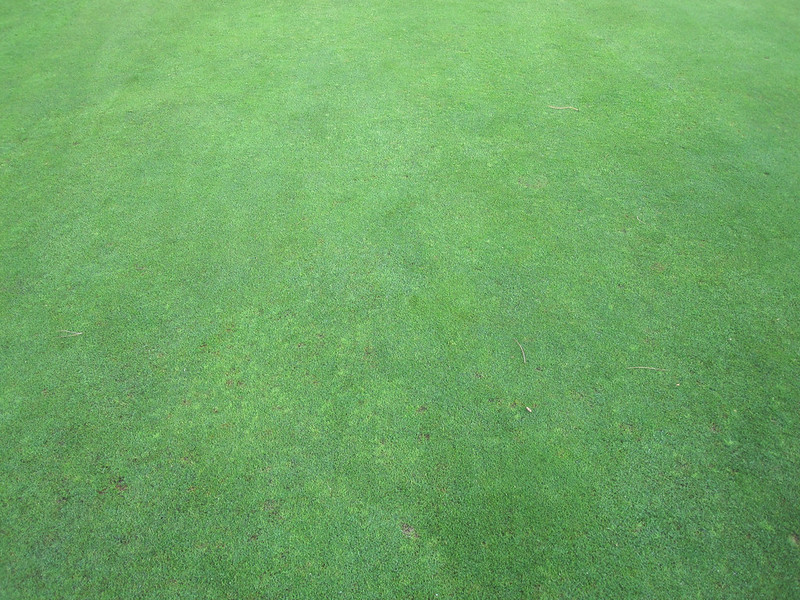
Yellow tuft (downy mildew)
Sclerophthora macrospora
A downy mildew producing small yellow tufts of densely clustered shoots; mostly cosmetic.
Identification
Small (1-3 cm) yellow tufts of many shoots arising from a single crown, easily pulled from the turf. Rarely kills turf but is conspicuous on greens.
Symptoms
Symptoms include yellowing and thinning of the turf, as well as the development of small, yellow spots or patches (< ½ inch in diameter). Severe cases may also result in a condition known as "witch brooming," characterized by heavy tillering and chlorotic plants with weak roots.
Signs
Polymorphic mycelium may be observed within the plant and lemon shaped sporangia may emerge from the stomates following incubation of submerged plant tissues in cold temperatures.
Biology
Yellow tuft is caused by the fungus Sclerophthora macrospora, which infects the leaves, stems, and roots of the turfgrass. The fungus is able to infect the plant through the stomates and can quickly spread throughout the plant.
Epidemiology
Yellow tuft is more common in turf that is already stressed, such as turf that has poor drainage or is mowed too low. It is also more prevalent in warm, humid weather conditions and during cool to moderate temperatures.
Favorable Conditions
Cool temperatures with excess surface moisture and poor drainage.
Cultural Management
Improving soil drainage, raising the height of cut, decreasing mowing frequency, avoiding mowing when the turf is wet, and using verticutting are all effective cultural control methods for yellow tuft.
Further Reading
University extension resources — open in a new tab.
Related Reports
No published reports yet for this pest.
Reports will appear here as they are peer-reviewed and published.