Black cutworms
Agrotis ipsilon
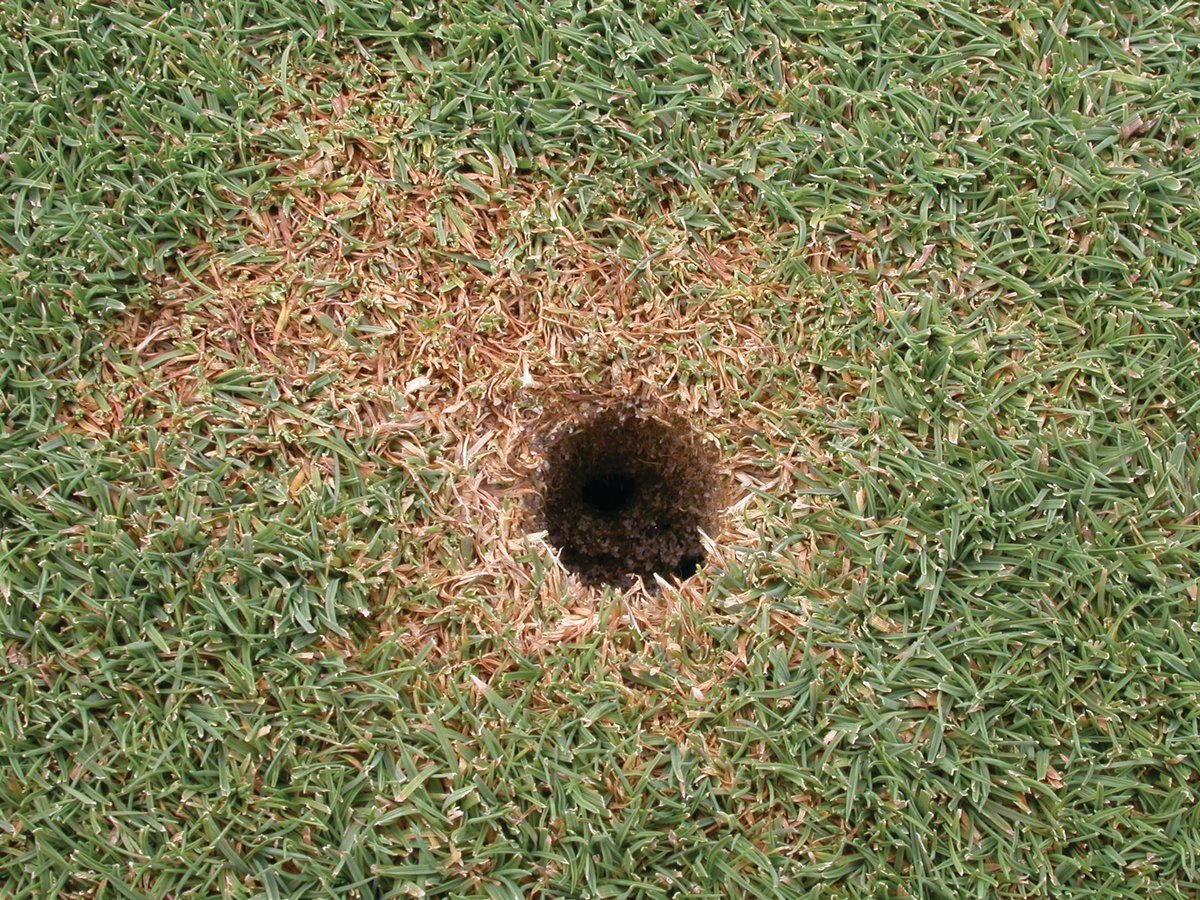
Smooth, dark caterpillars that clip grass blades at the crown, creating small round dead spots and ball-mark-like depressions on greens.
Identification
Smooth, dark gray-to-brown caterpillars that curl into a tight C when disturbed. Unlike armyworms, they lack distinctive head markings and body spots. Look for larvae at the soil surface during the day and active feeding at dusk; a soap flush brings them to the surface. Small circular dead patches and pockmarks on greens are diagnostic.
Symptoms & Damage
Cutworms clip blades near the crown, creating small circular dead spots that resemble punch-marks or ball impressions on closely mowed golf greens and tees. Damage is scattered and localized rather than sweeping in waves. On lawns they may cause bare patches where larvae have clipped the grass. Because feeding occurs on leaves rather than roots, healthy turf can often recover once larvae are controlled.
Biology
A moth with complete metamorphosis (egg, larva, pupa, adult). Larvae are nocturnal and burrow in the soil during the day, emerging at dusk to feed on grass blades. They feed for several weeks through multiple instars before pupating in the soil. Multiple overlapping generations occur per year, with larvae present from spring through fall; cold winters help limit populations in northern regions.
Occurrence & Spread
Damage appears as scattered, localized dead spots rather than large patches or bands. Peak injury often occurs in spring and again in late summer when larvae are larger and feeding is most active. Wet soils that remain soft favor larval burrowing and activity.
Favorable Conditions
Warm weather and wet, muddy conditions that keep soil soft for burrowing; heavy thatch.
Cultural Management
Maintain vigorous, dense turf that can tolerate and outgrow moderate clipping, reduce excess thatch that harbors larvae, improve drainage so soils firm up and discourage burrowing, and scout regularly so populations are caught before extensive damage. Conserve natural enemies including parasitic wasps and flies.
Further Reading
University extension resources — open in a new tab.
Related Reports
No published reports yet for this pest.
Reports will appear here as they are peer-reviewed and published.